
The faster we accept that the world as we know it is ending, the better. The faster we acknowledge that the contradictions of capitalism have led it into a systemic crisis that we can leverage for change, the better for the working class. This issue of the University of the Poor Journal tries to capture the spirit of the perilous dawn of new beginnings. Our slogan is “organization guided by knowledge,” and our aim is to master the knowledge that will support us to consciously embrace and make the most of new possibilities for the working class.
We seek to develop an understanding that will allow us not only to anticipate but also to impact the course of events. Lenny Brody’s “The Collapse of the International Rules-Based Order” lays out in clear terms the structural crisis of global capital and the role of the U.S. state, digging into a recent Council on Foreign Relations task force report. The context of geopolitical rivalry with China and the turn of both wings of the ruling class in the U.S. to authoritarianism points to the necessity for a revolutionary party of the working class.
In “Embracing Indigenous Knowledges,” Luis and Trini Rodriguez ground us in the theory of dialectical and historical materialism. According to this approach, societies develop and evolve on the basis of the economic relationships that govern how the means of life are produced and distributed. The authors make use of the term “original communism,” an alternative translation of Marx’s concept usually referred to as “primitive communism.” They affirm that Indigenous philosophy, worldviews and ways of organizing society are a deep well of knowledge connected to the history of this continent that we can draw on, as Marx and Engels did. If we want to build on new possibilities for the working class in the Americas, this is an important source of knowledge.
This issue offers two book reviews of important texts. The first, by Carlos Rodriguez looks at From the Bullet to the Ballot: The Illinois Chapter of the Black Panther Party and Racial Coalition Politics in Chicago by Jakobi Williams. Learning the history of U.S. working class struggle – and particularly the “people’s history” of building political independence and unity of the poor across lines of division – is critical to fortify ourselves for current and future tasks. The second, by Bruce Parry, examines Political Logic: Principles of Marxist Politics. This book, written by a leading member of the Chinese Communist Party, aims to do for Marxist political thought what Capital did for political economy. The book lays out 15 principles of Marxist political thought, and Parry strongly recommends studying Political Logic with a collective.
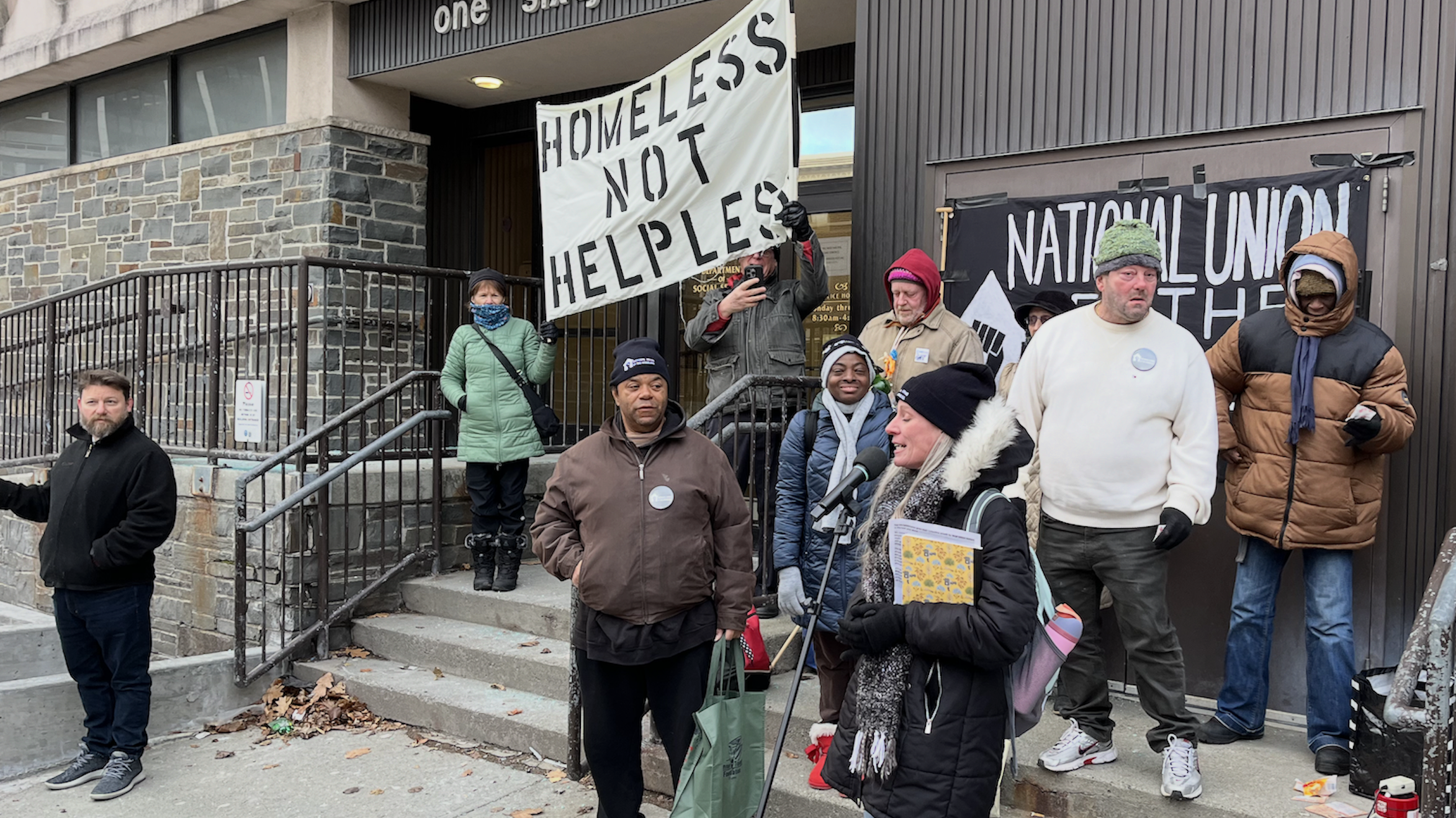
In “Homelessness, State Power, and Organizing from Below,” Todd Cherkis introduces the first installment of a three-part series tackling the landmark 2024 Supreme Court decision Grants Pass vs. Johnson that makes it illegal to be unhoused. This series points to the fundamental contradiction of a society where workers are required to pay for the basic necessities of life through wages, but can no longer access wage labor, which is being disrupted at an ever wider scale due to labor-replacing technology. And, as people are unable to pay for housing, they are being pushed to ever more marginal sectors of society.
Artificial Intelligence (AI) in the hands of the world’s richest multibillionaires is transforming every industry and sector of the economy. The healthcare industry is no exception. In “Global Capital, Healthcare and the Fourth Industrial Revolution,” Karim Sariahmed and Marc Shi unpack the critical and evolving role of the healthcare sector for global capital. They disrupt the discourse of how AI is being applied in the healthcare system and challenge the false narrative that the application of AI within capitalist healthcare stands to “solve” the healthcare crisis for the working class.
AI requires the physical infrastructure of data centers, which are being challenged everywhere they are being proposed because of their massive energy costs, water and air pollution, and little perceivable benefit to local communities. An excerpt from the 2026 New York State Poor People’s State of the State Report, “Unplug Data Centers,” explores the emerging contradictions connected to these powerful digital technologies and asks that revolutionaries consider the fights to stop data centers as potential sites for politically independent organizing.
All of these new and emerging conditions offer important new possibilities for the poor and dispossessed working class to build strategies for change in this moment.
– Editorial Committee of the University of the Poor Journal
Original artwork in this edition of the journal created by Anita Knisely-Durham