
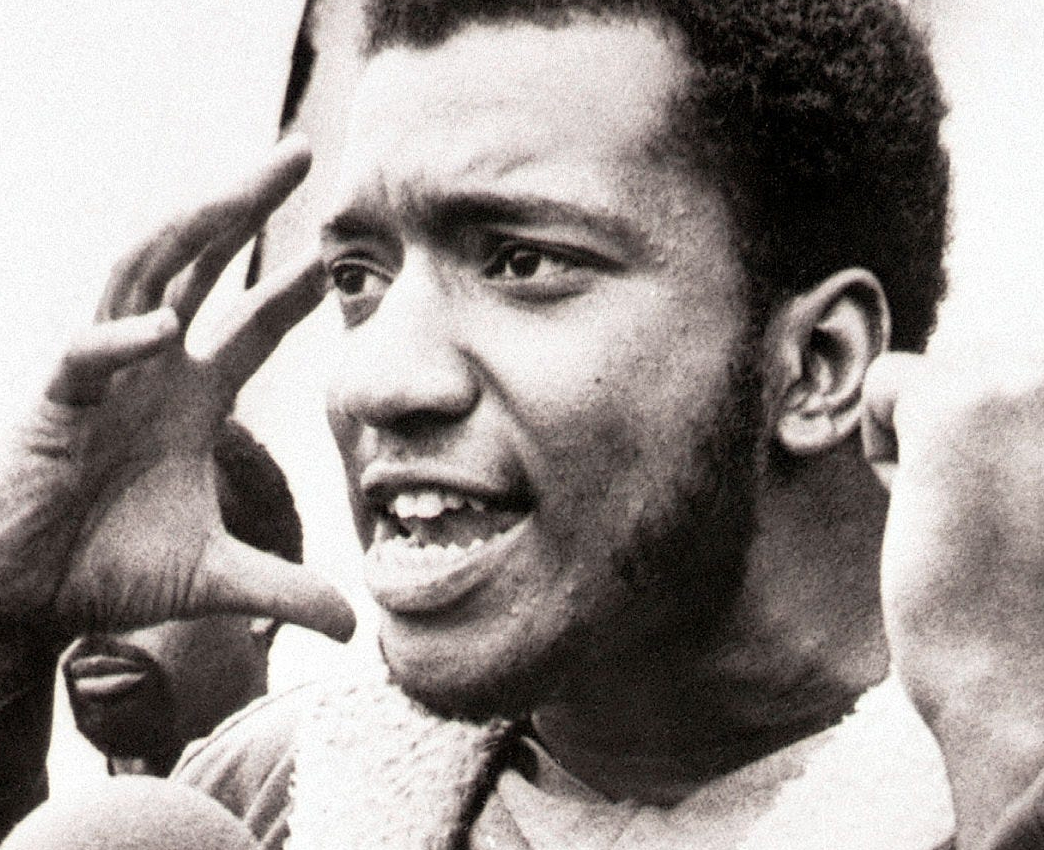
Review of: From the Bullet to the Ballot: The Illinois Chapter of the Black Panther Party and Racial Coalition Politics in Chicago. By Jakobi Williams, 2015.
By Carlos Rodriguez
“Politics is the art of the possible” – Otto von Bismarck
“When most Americans think of the Black Panther Party, they imagine a black gun-toting radical group out to kill white people. This was the image created and promoted by the media, the Federal Bureau of Investigation (FBI) and its Counter Intelligence Program (COINTEPRO). By promoting this image, they could isolate, infiltrate, and destroy the Panthers.” From ‘The 6 Panther Ps: Tools for the Poor Organizing the Poor in the Fight to End Poverty Now!’ – Willie Baptist and Phil Wider
Revolutionaries who are serious about understanding how to develop a social base for a political movement to end poverty will be pleased to read Dr. Jakobi Williams’ book, From the Bullet to the Ballot: The Illinois Chapter of the Black Panther Party and Racial Coalition Politics in Chicago (The University of North Carolina Press, 2015).
The Black Panther Party for Self Defense (BPP) was born in Oakland, California as an organization for self-defense of the Black working class. Not only did the BPP argue that folks had a right to defend themselves and their community, but they recognized that the development of an organization of revolutionaries needed to be integrally connected with the demands and needs of the people. For these activities, they were declared “criminal” and “terrorists.”
Dr. Williams takes us on a tour of how the BPP knew the law, studied history (United States and world history, which they were required to study at least six hours per day), participated in daily community service and applied Marxist theory to real world practice. In fact, many of their programs were adopted by the United States government (free breakfast programs for children, free legal aid and health clinics to name a few).
What made them so dangerous in the eyes of the government? Dr. Williams argues that it was it their focus on “racial coalition politics.” In other words, the BPP made the assessment that poor folks, regardless of skin pigmentation, all faced the same injustices and barriers created by a capitalist system that has a vested interest in keeping the working class divided. Dr. Williams focuses his attention on the Illinois Chapter of the Black Panthers and particularly the masterful work of Deputy Chair Fred Hampton and Robert (Bob) E. Lee who led the development and coalescence of the original Rainbow Coalition.
Chicago, being the most racially segregated city in the United States, controlled by the Democratic Party machine, was and is home to people who migrated from the U.S. South, Puerto Rico, Mexico and Appalachia. The BPP recognized that ending police brutality, predatory landlords, unequal schools, poor healthcare and slums could only be solved as a class question. Hampton, who was involved in the NAACP, knew that the Rev. Dr. Martin Luther King, Jr. had come to the conclusion that the “divide and conquer” techniques employed by the ruling class could only be defeated by uniting the working class across color lines. In 1968, the BPP began to reach out to other poor people’s organizations across Chicago to form the original Rainbow Coalition.
The Rainbow Coalition included the Young Patriots, a poor white working-class grouping, mainly located on Chicago’s northside and led by William “Preacherman” Fesperman and Steve Tappis. It also included poor Puerto Ricans from the northwest side mainly from the Young Lords, an organization led by Jose “Cha Cha” Jimenez. The Coalition kicked off its work by holding a press conference on the first anniversary of Dr. King’s assassination, stating that they would be continuing Dr. King’s work of the Poor People’s Campaign and asking emphatically: “What do we have in common, and what we can unite on? Poverty.”
Tours of Chicago were conducted by the Rainbow Coalition, recruiting students, formerly incarcerated people, gang members and women — three of whom became field lieutenants. Boldly and openly stating their aims, the Coalition challenged the Democratic Party machine on unemployment, poor schools, dilapidated homes, police brutality and lack of healthcare. Themes of “We can’t fight racism with more racism. We need solidarity,” to “You can’t fight capitalism with Black capitalism. You fight for socialism” guided the Rainbow Coalition’s adherents.
No social movement can succeed without learning from history. Today’s newly emerging movement to end poverty in this land of plenty can and must learn many lessons from the historical experience of the Black Panther Party of the late 1960s. As Baptist and Wider said, ‘There must have been something that the Panthers did effectively to capture the imagination of the poor and command the attention and attacks of illegal governmental authorities.”
Revolutionaries must also learn about how the enemy operates. The use of COINTELPRO (the FBI’s counter-intelligence program) and the Chicago Police Department’s Red Squads (born out of the House Un-American Activities Committee) demonstrated how the government will not hesitate to break the law. Their use of unconstitutional and illegal tactics, including false imprisonment, assassination and exile, should be studied. Dr. Williams said that out of the 298 COINTELPRO targets, 293 were aimed at the BPP and the Rainbow Coalition.
Today, the fundamental economic condition we need to understand is the continuing, expanding, and increasing shift from mechanization to electronics in all aspects of the economy. The result of this shift is the vast growth of structural unemployment and poverty of not just black urban youth, but of people of every color, every age, and every geographic area. The struggles of the unhoused, which is part of the 140 million poor and low-wealth people in the United States, will allow revolutionaries to develop that social base of the new movement to end poverty.
Though there are parallels, we must recognize that the situation today is far more complex. Therefore, we must make our assessments and find in the BPP’s history those concepts that would help us to reach that base today. Knowing what is possible today can give rise to a movement to abolish the capitalist system that traps us in abject poverty and misery.
—