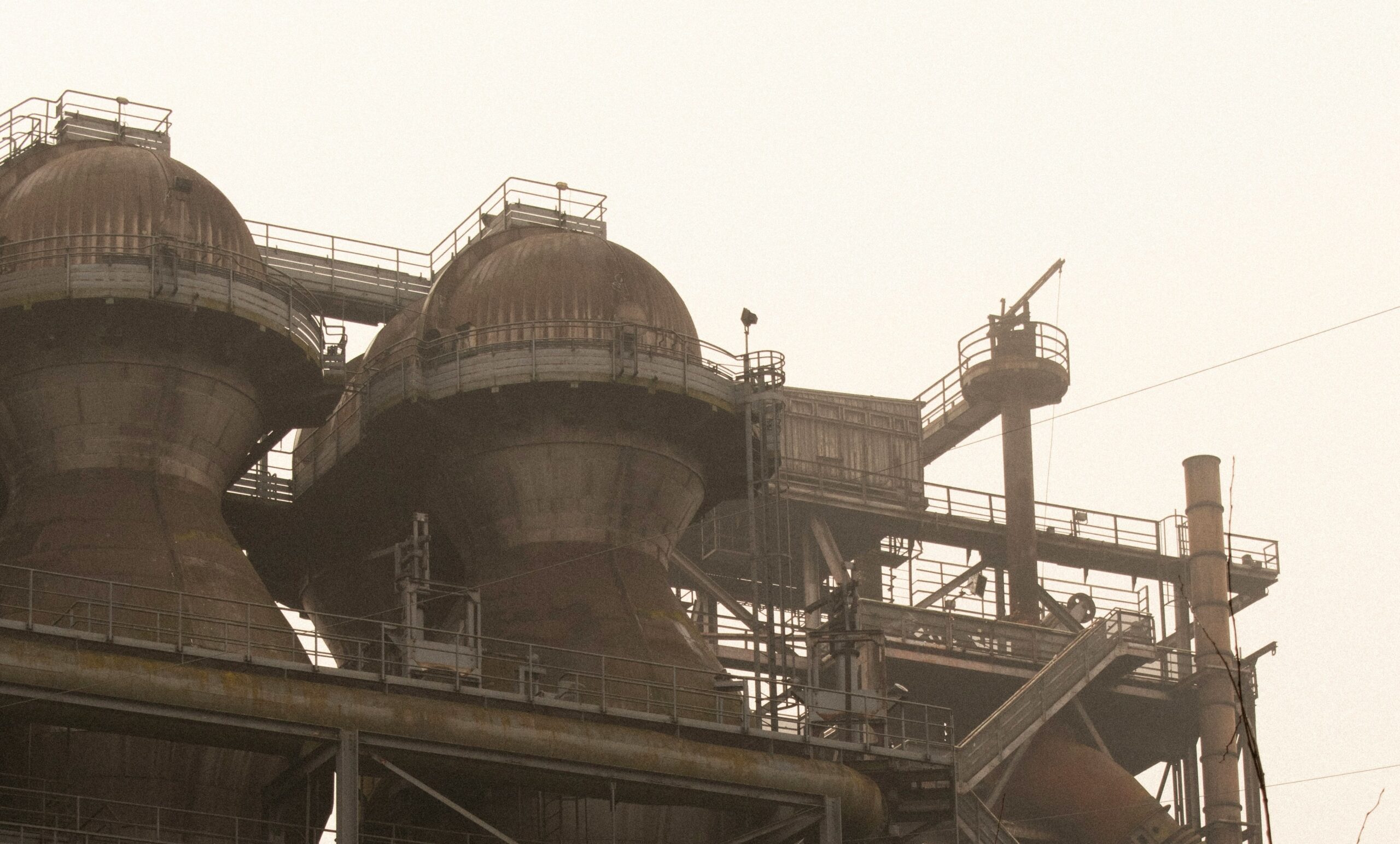
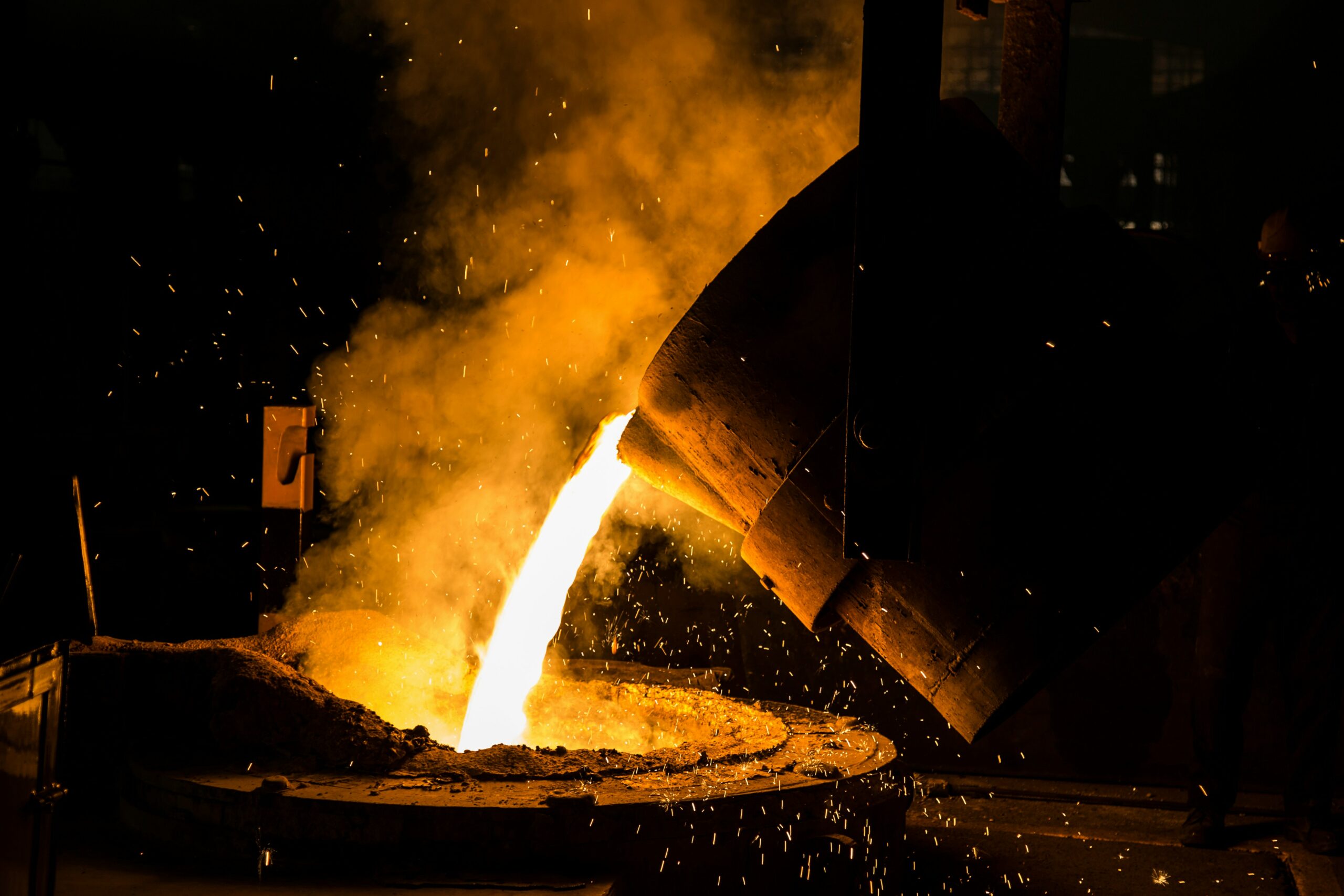
The August 11, 2025 explosion at U.S. Steel’s Clairton (Pennsylvania) Coke Works comes 118 years after journalist William Hard wrote “Making Steel and Killing Men,” a groundbreaking report on U.S. Steel’s South (Chicago) Works where 46 men were killed in a single year.
This article is part of the series, “Three Organizers Speak on the Clairton Coke Works Disaster.” Read the pieces by Nijmie Zakkiyah Dzurinko and Larry Regan.
By Anthony D. Prince
In August 2025, when a massive gas explosion killed Timothy Quinn, 39 and Steve Menefee, 52 and injured ten others at U.S. Steel’s Clairton (Pennsylvania) Coke Works, they weren’t actually making steel. What these men were doing, what they sacrificed their lives to produce, metallurgical coke: coal baked at nearly 2000 degrees Fahrenheit until it becomes over 85% per cent pure carbon. From there, it goes to the blast furnace where it efficiently fuels a mixture of iron ore and limestone at 3,000 degrees F. creating pig iron which, after oxygen is injected at supersonic speeds, becomes steel.
I know all about coke and the deadly black dust it produces because I worked on the blast furnace in the very same mill which William Hard used to tear back the curtain and reveal the human cost in tears, sweat and blood of making steel in America. When I was Employee No. 13-056 at the once giant – now extinct – South (Chicago) Works of the United States Steel Corporation, the coke came in on barges nearly round the clock, The dust laden stock house, where the scale cars added up the tons, looked like the inside of a Kentucky coal mine.
Then, more dust as the coke was loaded into skip cars and hauled 200 feet up the side of the blast furnace where it was charged, along with the raw materials needed to make iron, into the “throat” of the hissing, roaring, smoking, fire-breathing, gas-producing coke-burning inferno. For every one minute that molten iron was tapped we created one million dollars in profits for the world’s largest steel corporation.
Not only as a steelworker, but as Chairman of USWA Local 65’s Union Safety Committee, I knew, with 5,000 serious lost-time injuries and five fatalities in as many years, how death, injury and occupational disease stalked our mill, just as it did at the Clairton Works. I knew, too, that it was the negligent recklessness and thirst for profit of the world’s largest steel company that held the plant gate open for the Grim Reaper.
In 1978 I saw it in the South Works foundry, where we found silica dust levels 10 times the legally allowable airborne concentration, where we had 26 confirmed cases of complex silicosis, where “G.I.” Joe Banvich, tethered to an oxygen pump, made the front page of an award-winning special edition of the Chicago Sun-Times entitled “The Working Wounded”.
I saw it in the horribly charred remains of Paul de la Garza in the Basic Oxygen Shop when a long ago reported but un-repaired defective warning horn failed to operate just as the brakes jammed on an overhead crane carrying 10 tons of molten steel. Paul never heard or saw it coming as the ladle tipped and the metal poured down. He was five days away from retirement.
And I saw it in the early 1980’s when U.S. Steel became “USX” diverting its profits to buy Marathan Oil, a piece of Disneyworld and other lucrative investments while shutting down South Works one department at a time. Last to go was the #4 Electric Furnace where Eddie Cimochowski, working out of his job class, with no safety man watching, without the full crew mandated by U.S. Steel’s official “Safe Job Procedures,” was crushed under a massive iron shear used to cut scrap. I saw how the company illegally altered the scene of the accident before the Cook County States Attorney could determine if a charge of negligent homicide might be considered.
Even when the mills closed, thousands of us were barely able to draw a breath, thanks to permanent scarring of our lungs from years of exposure to coke breeze, silica dust, asbestos and other deadly occupational toxins. “We left the mill,” we said, “but the mill didn’t leave us.”
And the killing of men (and women) took other forms. Journalist William Serrin writes about the rash of suicides that followed U.S. Steel’s announced shutdown of the Homestead Works. He tells of Foreman David Sapos who wrapped a steel cable around his neck and jumped off a structural beam to his death. Rich Locher lost his job as a crane operator, studied nursing but still couldn’t find a job. He shot himself in his own garage.
Mike Stout, a former crane operator and chief grievance officer for Steelworkers Local 1397 at the Homestead Works, recalls the impact of the deindustrialization of the Mon Valley:
“Within a five-year period from 1981 through 1986, I personally knew ninety-one workers under the age of sixty who died of strokes, cancer, heart attacks or suicide. It was an economic war.”
From Homestead to Homelessness
Today we see the face of the steelworkers in those permanently disabled from injuries and occupational disease. We see it in the hospital burn units. We see that face and those of our families in the polluted air we breathe. And we see it on the streets of Pittsburgh, South Chicago and Gary, Indiana where the ranks of the unsheltered and unhoused include men and women whose descent into homelessness began when the mills and fabricating shops and all the jobs dependent on the steel industry disappeared.
I remember the last time I drove from Chicago to the old Steelworkers Local 1397 headquarters in Homestead across the Monongahela River from Pittsburgh. It was 1991, two years had passed since the Homestead mill had closed. The sign reading “Local 1397 Hall” was gone, replaced by one that read “Club 97.” It had become a community refuge center, established and operated by former steelworkers and their sons, for the those who had been tossed onto the human scrapheap. I talked to them about a new Union that I was helping to build: a Union of poor people, of the homeless, of cast-offs from the cast house, from the coke oven to the corner, from the structural mill to the structurally unemployed. I told them how we had formed the Chicago/Gary Area Union of the Homeless, how we were using what we learned organizing on the shop floor to build a new movement for jobs, housing and health care for all.
This year’s annual Labor Day parade through Pittsburgh began with a “moment of silence” for the men who died at the Clairton Coke Works. But now it’s time for us to be heard. Time to demand accountability for these deaths and bring an end to the industrial slaughter that each year claims over 5,000 men and women. And that doesn’t include the tens of thousands who suffer permanently disabling injuries and occupational disease.
But it doesn’t have to be this way. Today, as we consider the victims of the Clairton Coke Works disaster, we lift our banner inscribed with the time-honored watchword: “Remember the dead; Fight like hell for the living.”
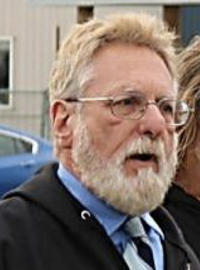
The author is the former Chairman of the Steelworkers Local 65 Safety and Health Committee at U.S. Steel’s South (Chicago) Works and currently serves as Lead Organizer and General Legal Counsel for the National Union of the Homeless. He can be contacted at princelawoffices@yahoo.com.