Lessons from the History of the 1990s US Labor Party
By Willie Baptist, Kristin Colangelo, Phil Wider, and Kirsten Rokke
As the failure of the two-party system becomes increasingly clear, new impulses of resistance to this crisis are arising from among the most exploited and oppressed masses of the US working class. These masses amount to close to 50 percent of the US population. Increasing labor superfluousness and underemployment mean that some 140 million people in the United States are poor and low-income. This development is a result of an unprecedented historical shift in the world economy caused by the unfolding comprehensive micro-electronics technology revolution. It is a human labor-replacing technology revolution that is throwing the prevailing capitalist exploitative economic system into systemic crisis.
It is an economic and political crisis that is forcing the poor and dispossessed masses into a life-and-death struggle for their very survival independent of and in opposition to the economics and politics of capitalism. This politics includes the breaking down of the Democratic and Republican Parties electoral system.
In conversations of how to navigate this period, it is important for us to understand lessons from the 1930s and 1940s, which are a focus of systematic study in the University of the Poor network. As argued in an article of the University of the Poor Journal (“Lessons from the Class Struggles of the 1930s and 1940s” by Lenny Brody), the impulses exhibited in the 30s toward a politics independent from Wall street capitalists – including through the Farmer-Labor Parties, Ending Poverty in California (EPIC) Clubs, and in the black belt South, the land-and-income struggles of the poor white and Black sharecroppers of the Southern Tenant Farmers Union – were largely abandoned when the Communist Party and CIO joined with the New Deal Coalition of the Democratic Party.
We must also draw both the positive and negative lessons of the launch and demise of the 1990s US Labor Party. As mentioned before, the Great Depression of the 1930s brought on by a deep critical economic crisis of capitalism provoked a number of politically independent impulses from the New Deal Coalition of the Wall Street controlled Democratic Party. The formation of the Labor Party in 1996 was the last major effort to build a political movement of the working class independent of the Democratic Party which had falsely fashioned itself as the so-called “Party of Labor.” This significant effort holds many lessons for us today. With this article we want to draw particular attention to lessons from the experience of KWRU and other organizations of the poor in the Labor Party.
The Launching of the Labor Party
In 1996, 1,400 delegates from unions representing more than 2 million workers met in Cleveland and launched the Labor Party. This founding convention was built on five years of organizing by the Labor Party Advocates, led by Tony Mazzocchi and Bob Kasen, leading intensive and participatory popular education sessions and bringing resolutions to union members to pass expressing their shared belief that “The bosses have two parties. We should have one of our own!” Organizations that sought to organize marginalized and excluded workers such as the Farm Labor Organizing Committee (FLOC) and the Kensington Welfare Rights Union (KWRU), Michigan Welfare Rights Organization (MWRO) and their parent organization, the National Welfare Rights Union also joined. In the days leading up to the founding convention, a resolutions committee with representatives from across the participating groups hashed out an ambitious and inspiring platform that, in the end, reflected an agenda for the working class. The perspective of KWRU, MWRO and the National Welfare Rights Union were critical in advocating for the unemployed with a universal basic income that was included in the first plank of the platform: a jobs guarantee.
Specifically, the program included a call to amend the U.S. Constitution to guarantee a job at a living wage. It also demanded restoration of the rights to organize, bargain and strike; universal access to quality healthcare; access to quality public education; an end to the corporate abuse of trade; an end to corporate welfare; and revitalization of the public sector. This program, “A Call for Economic Justice,” was adopted as the program of the party at the founding convention along with an organizing plan to wean the labor movement from the two-party political system. More details on the rise and fall of the US Labor Party are included here.
Tony Mazzocchi and the Oil, Chemical, and Atomic Workers Union (OCAW) led the drive to organize a labor party. Mazzocchi was widely regarded as a visionary at the forefront of the labor movement’s involvement in the major struggles for social justice in the postwar period — from the civil rights movement, nuclear proliferation, and the Vietnam War to environmental justice and the movement for occupational health and safety.
Over time, he also became very supportive of the struggles of the unemployed and homeless workers. KWRU leaders who worked and built a relationship with Tony Mazzocchi saw his growing and honest appreciation of the labor movement as a whole including the political importance of its unemployed and non-union sectors. In other words, he sincerely took the old working-class unity slogan, “an injury to one is an injury to all!” deeply to heart.
By the 1990s, labor-replacing technologies had triggered an irreversible trend toward deindustrialization that was racking the US economy. The few jobs being created were mostly low-skilled and low-paying, and many former middle-income union members whose jobs had been eliminated found themselves among the ranks of the homeless. This dynamic forged a new revolutionary section of the working class, that is, the growing mass of the recently impoverished section of the working class.
Therefore, the Labor Party of the 1990s had to reckon with the fact that a growing section of the working class would not or could not be organized through their workplace. As a reflection of that reality, some forward-thinking leaders argued to include representatives of welfare rights organizations and other organizations of the poor and homeless in the Party. These organizations of the poor were waging political struggles for survival outside the workplace.
The Role of KWRU and National Welfare Rights Union
Some of the most important lessons from the attempt at building a US Labor Party can be drawn from the experience of the Kensington Welfare Rights Union (KWRU) in their fight to organize the growing section of the working class impacted by the labor replacing micro-electronic technology. KWRU was one of the most active chapters of the National Welfare Rights Union. It was a multi-racial organization of poor and homeless families rooted in Kensington, the most impoverished neighborhood in Philadelphia which consisted of poor whites, poor Latinos, and poor Blacks, and a growing community of poor Asians.
The 1990s were a period of stepped up attacks against all of labor by both the Democratic Party and Republican Party. Two major forms of these attacks were forced contract concessions from organized labor and welfare cuts on poor and homeless workers. KWRU understood that organizing the poor for their survival must necessarily be independent of the Democratic Party and Republican Party, and it joined the Labor Party because it was moving in a similar direction.
In the mid-1990s, the period around the founding of the US Labor Party, KWRU was gaining prominence in Philadelphia through highly organized and effective agitational protests like taking over the St. Edward the Confessor Church to serve as temporary housing and an organizing hub, the week-long march to Harrisburg that culminated in beds being placed in the State Capitol rotunda, and housing 58 families in the convention center during the Christmas season. These dramatic and provocative tactics, which drew on the experiences of both the National Welfare Rights Organization and the National Union of the Homeless, earned the organization media attention, influence and notoriety.
In the course of these struggles, leaders within KWRU recognized the need for unity of action with other sections of the working class on the basis of common economic needs. These joint actions were efforts to bridge the divide between employed and unemployed workers. KWRU came into a relationship with visionary trade union leaders who recognized the same. In Philadelphia, KWRU was one of few organizations of the unemployed and underemployed that was accepted as an official affiliate of a labor union – District 1199C of the National Union of Hospital and Healthcare Employees AFSCME. This same insight about the need to build the unity of employed and unemployed workers guided KWRU in its decision to join the US Labor Party.
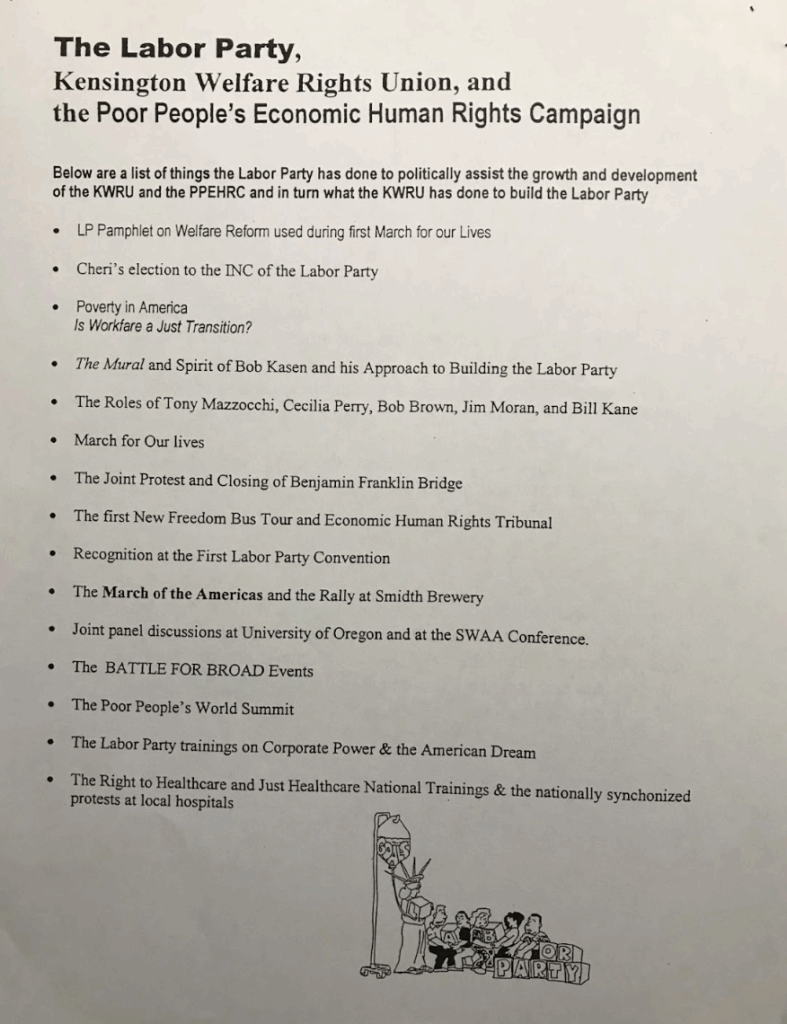
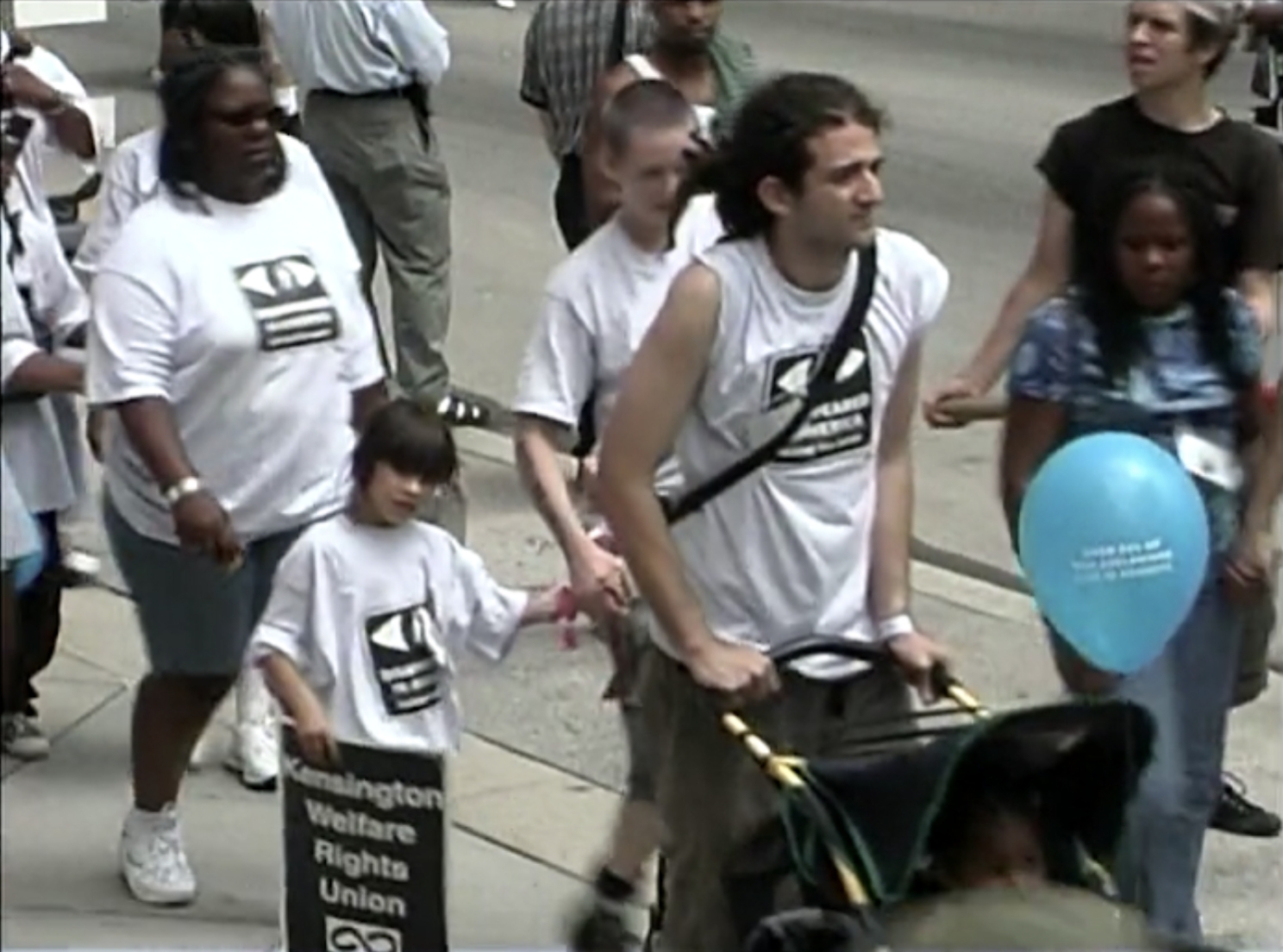
The KWRU spearheaded major activities, including a national 30-day Freedom Bus Tour in 1998 to reignite Rev. Dr. Martin Luther King, Jr.’s Poor People’s Campaign. This led to KWRU playing a leading role in the launching and development of a nationwide Poor People’s Economic Human Rights Campaign (PPEHRC). PPERHC coalesced through united actions and protests of over 100 poor people’s organizations throughout the country. This unity was built on the basis of the common economic needs and interests of the working class as a whole. These needs were formulated as the rights to healthcare, housing, education, living wages, among others, framed as key components of the economic, social, and cultural rights articles of the United Nations Universal Declaration of Human Rights. PPERHC’s demands corresponded with the basic demands of the Program of the US Labor Party.
Each year, PPEHRC organized one major national action that brought together representatives across its national network. In 1999, the network led a march from Washington DC to the United Nations Headquarters in New York City, called the March of the Americas. The march stopped for a rally in New Jersey, where Tony Mazzocchi joined the rally to give a speech and support the march. Union Theological Seminary provided lodging to the marchers when they arrived in New York City. This collaboration helped to spark a partnership that developed into the Poverty Initiative, now the Kairos Center for Religions, Rights & Social Justice.
Arguably one of the highest points of independent politics of the US Labor Party was the March for Economic Human Rights led by KWRU and PPEHRC at the 2000 Republican National Convention held in Philadelphia, Pennsylvania. This was the focus of the PPEHRC annual national mobilization for that year. Out of the consistent activity, projects of survival, and civil disobedience conducted by KWRU, they had built relationships with many local unions, some of which were members of the Labor Party and some KWRU was helping to recruit into membership in the Party. For example, leaders of the Industrial Union Council of New Jersey had previously joined members of the KWRU in a civil disobedience protest that closed down a major thoroughfare, the Benjamin Franklin Parkway Bridge, and signed up for the RNC March in 2000 as well.
In the days leading up to the RNC, Mazzocchi delivered a keynote address at the founding of PPEHRC’s new educational wing, the University of the Poor. During this speech, delivered at Temple University, Mazzocchi emphasized the importance of having organizations of the poor like the KWRU as part of the Labor Party, that the Labor Party needs to represent all of labor, all of the working class, including the unemployed and underemployed, not just the trade unions.
Bob Kasen, another lead Labor Party organizer in agreement with Mazzocchi, was also very supportive of the organizing of the most impoverished sections of the labor movement and recruiting them as strong affiliates of the Party. For instance, he was able to get members of progressive caucuses of the International Brotherhood of Teamsters to raise money and other support for one of KWRU’s homeless encampments. In thanks and commemoration of all the work of support, the KWRU painted a large mural of Bob Kasen in the impoverished community of Kensington, Philadelphia.
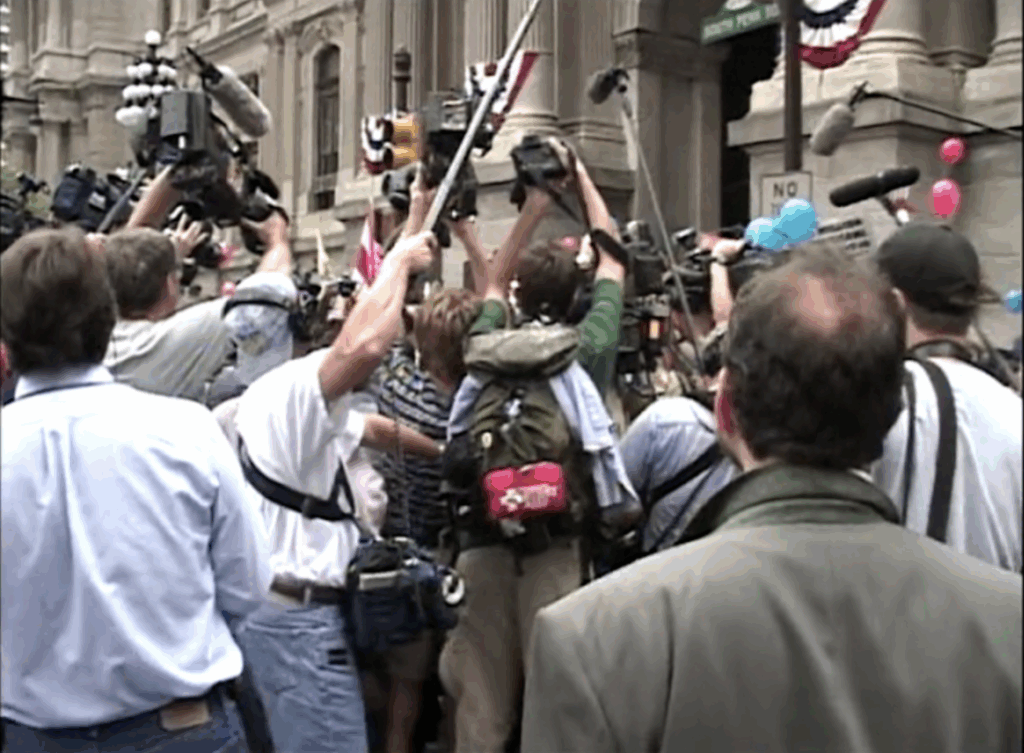
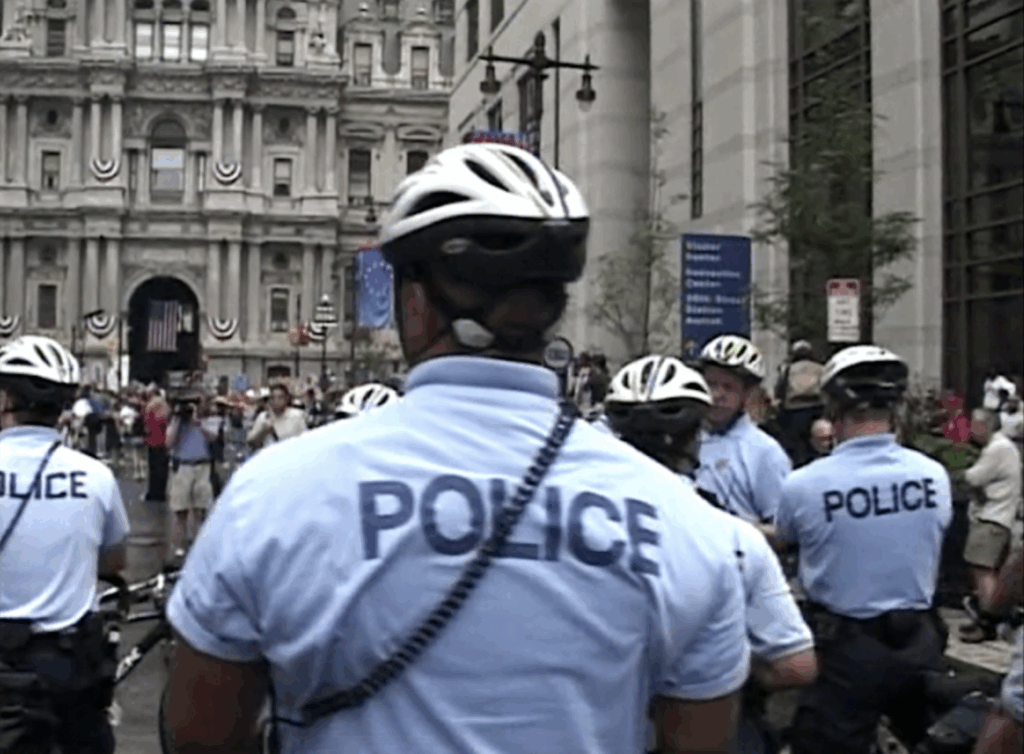
The march to the 2000 Republican National Convention brought together organizers from across the country through the PPEHRC network. In the events leading up to the convention, KWRU prepared for the much anticipated international and major media coverage of the RNC as the next major event coming after the global coverage of the dramatic “Battle of Seattle” at the end of 1999. It was estimated that close to 15,000 major and international media covered the Republican National Convention and the March for Economic Human Rights, which has been called the Battle for Broad Street. While the march was denied a permit and deemed “illegal,” organizers were undeterred and went on to orchestrate the largest poor people’s mobilization since the 1968 Poor People’s Campaign. Anticipating clashes with the police, 1,000 people volunteered in advance to be arrested.
KWRU led between 10,000 and 15,000 marchers with their children in a mass civil disobedience protest demanding the abolition of poverty. It was called the March for Economic Human Rights and it was joined significantly by the largest unions of the Greater Philadelphia area, namely the 1199 Hospital Workers and the Sanitation Labor Union – AFSCME District Council 33, neither of which had yet joined the Labor Party. Bob Brown from United Electrical Workers Union attended the march, along with Jim Moran with the local branch of Mazzocchi-led Health and Safety Committee (PHILAPOSH), Bob McDevitt with the Atlantic City casino workers, and Bill Kane with the the Industrial Union Council of New Jersey. The March for Economic Human Rights successfully took full advantage of major media coverage to build public attention and pressure that paralyzed the large police and national guard forces. This made way for the protest to illegally but successfully march all the way down Broad Street to the door of the Republican National Convention in a confrontation captured in the documentary film, Battle for Broad.
Heading in different directions
The Labor Party emerged from a strategic alignment of different sections of the working class. At the time the Labor Party was founded, the impact of the de-industrialization had already produced conditions where the working class, which could previously rely on union jobs, was increasingly pushed into poverty, with fewer and fewer opportunities for survival.
These economic and social developments underscore the political significance of the work of mass organizing the under-employed and unemployed workers around their basic class economic needs, essentially taking up the Labor Party’s Just Healthcare and Right to a Job at a Living Wage Campaigns. This was precisely the leadership role that the KWRU along with other poor organizations of the PPEHRC played during the preparations and conduct of the protest March against the 2000 Republican Party National Convention. This moment was arguably a high point of the activities of the Labor Party, and it holds very important lessons today for establishing real political independence of the working class from the rule of capital and its two-party electoral system.
KWRU’s work within the Labor Party and its growing unity with its lead organizer Tony Mazzocchi and his section of that Party was the implementation and further development of the Labor Party Program. As mentioned earlier, the platform recognized the right of the working class to the basic necessities of life as opposed to capitalist-class rights to private property in the means of production and exchange.
When George W. Bush was elected in 2000, the upper-income trade-union sections of the working class went back into the Democratic Party. They turned away from the Labor Party Program. As the Labor Party went into decline, the KWRU and other poor people’s organizations had no choice but to continue to carry out the Labor Party Program. They did this through their continued efforts toward re-igniting the Rev. Dr. Martin Luther King, Jr.’s Poor People’s Campaign – to unite the impoverished masses across color lines and other lines of division. The KWRU understood this as continuing Mazzocchi’s legacy.
Lessons
Highlighting the history of poor organizing, particularly that of KWRU in this experience, helps to highlight some important lessons that deserve more attention.
First, it should be clear that any attempt to organize a party independent of the two electoral parties of capital must be rooted in the section of society most impacted by the effects of capitalism in crisis, the growing most impoverished section of the working class. This section of the working class has the least ties to capital and therefore the least to lose in the restructuring of society. The plight, fight, and insight of the most impoverished section of the working class must be the foundation of all class struggles today, including the basis of political independence within and beyond the electoral arena.
The second lesson is that we need the unity and organization of the poor as an unsettling social force to assert leadership in the mass struggles of the whole working class. This capability is based on the unity of the poor around their common economic and social needs, such as healthcare, decent housing, quality education, etc. These needs are basic class survival needs that neither the two capitalist parties and the capitalist economy in its present systemic crisis can meet. This political situation today can only be impacted by the organization and political education of this section of society. The Labor Party and its Program represented an attempt at a mass party of the whole working class, but the poor were not sufficiently organized to play a leading role in that effort. It is significant that the Labor Party began early on to attract impoverished fighters and their organizations into its ranks. This included such Labor Party affiliates as the Michigan Welfare Rights Organization and the National Welfare Rights Union, who, after the demise of the Labor Party, took up and continued the international fight for the human rights to water and other basic common economic needs of the whole working class.
Low-income farmworkers of FLOC struggling for economic survival joined the Labor Party along with fighters from the National Union of the Homeless, who had been waging politically impactful synchronized national housing takeovers. However, these Labor Party-affiliated organizations of the poor were not sufficiently organized in size and influence to play a stronger and sustained role so as to determine the ultimate course of this important attempt at mass political independence.
Third, in order to take steps toward the first and second lessons, the leaders emerging out of survival struggles of the poor must be systematically trained and developed into clear and committed conscious revolutionaries. Revolutionaries must fight for this political direction, that is, prioritizing the development of revolutionary leaders out of the growing ranks of the poor. Given the level of disunity and disorganization of the poor, leaders equipped with lessons from the experience of the Labor Party, and other historical and current struggles, summed up in revolutionary theory, will be essential to avoid the silos and syndicalism, sectarianism, paternalism towards the poor, cooptation and political police infiltration that too often dominate and misdirect efforts for change.
Today’s economic and political conditions are hastening the breakdown of the US two-party system. At the same time, they are giving rise to scattered impulses of survival struggles of the exploited and oppressed that are politically independent of the ruling class of big capital and their electoral parties. In considering how to pull together these impulses into a united powerful movement of employed and unemployed labor, it is useful to study KWRU’s experience in the Labor Party generally, and specifically at the moment of the 2000 March for Economic Human Rights on the Republican National Convention.
It was a glimpse into what is possible when the organized poor, this time in the form of KWRU, Michigan Welfare Rights Organization and other organizations of the poor, collaborate with and lead other sections of the organized working class. We must learn these lessons in order to carry forward Mazzocchi’s vision and program for a mass independent party of the whole working class.
—
Willie Baptist is a formerly homeless father of three who came out of the Watts uprisings and the Black Student Movement. He has 50 years of experience educating and organizing amongst the poor and dispossessed including working as a lead organizer with the United Steelworkers, as an educator and organizer with the National Union of the Homeless and its educational arm, the Annie Smart Leadership Development Institute, as the Education Director of the Kensington Welfare Rights Union for 10 years, and as a lead organizer and educator for the Poor People’s Economic Human Rights Campaign, as well as many other networks.
Kristin Colangelo is a formerly homeless mother of three. She has organized poor and homeless families for the past 25 years. She is the Organization Secretary and Membership Director and one of the national organizers of the National Union of the Homeless. She is also the Co-Coordinator of the NUH Membership Development Committee tasked with identifying uniting and training leaders and the development of a national leadership training Institute She is the coordinator of the University of the Poor’s Poor Organizing the Poor Collective that facilitates and supports poor and homeless organizing nationally. She is a Root Coordinator of Put People First – PA, a grass-roots, base building organization that is building independent political power of the poor and dispossessed in PA through the struggle for healthcare as a human right. She is a member of the Kairos Center’s Education Committee.
Phil Wider has been an organizer and political educator in the U.S. movement to end poverty for over three decades. His entry point to the U.S. survival movement was through the Philadelphia/Delaware Valley Union of the Homeless, a lead chapter of the National Union of the Homeless. He’s currently a co-coordinator of Political Education and Leadership Development with Put People First! PA, a member of the Nonviolent Medicaid Army (NVMA), and a co-coordinator of the University of the Poor’s Political Coordination Committee and Standing Committee.
Kirsten Rokke is an organizer who has engaged with electoral and issue campaigns for the past 20 years, including at the local, state, and federal level. Currently based in Pittsburgh, she previously lived and organized in Chicago.