
By Kirsten Rokke and Lenny Brody
The 2024 Presidential and Congressional elections revealed more clearly the breaking down of the US two-party system. Neither major electoral party is able to put forward serious solutions to fundamental issues like housing, health care, or the climate emergency. Democrats and Republicans have nearly identical stances in support of Israel’s aggression in Gaza and Lebanon, and both parties point fingers at China as the global villain who stole American jobs and poses a national security threat. Nearly 90 million people eligible to vote in 2024 sat it out, this is more than the number of votes cast for either Presidential candidate. As the failure of the two-party system becomes increasingly clear, new impulses of resistance to this crisis are arising. It is vital that these be understood as an expression of a fundamental economic shift – the impact of labor-replacing technology.
While the elections have their limitations and serious challenges, they are also one space where people in the US turn when they are looking for change. Through the two parties of the capitalist class, this impulse toward using elections to advance change has been contained and coopted, but this approach to maintaining political order is no longer up to the challenge. This situation presents opportunities if it can be navigated in a way that preserves political independence.
In conversations of what is to be done – should we start a new party, can we “save” or “take over” the Democratic party, or should we do as Bernie Sanders recently suggested and run more people as Independent candidates – it is important to study the positive and negative lessons of the launch and demise of the 1996 US Labor Party. Since the New Deal Era of the 1930s, questions of independence from the two major parties had not significantly been raised until the rise and eventual demise of the US Labor Party in the 1990s.
(See Lenny Brody’s article on lessons to be drawn from the experience of the 1930s and 1940s.)
Formation of the Labor Party
In 1996, after five years of organizing, talking to union members and organizers across the country, 1,400 delegates from unions representing more than 2 million workers met in Cleveland and launched the Labor Party. Also joining the effort were organizations focused on organizing marginalized and excluded workers, such as the Farm Labor Organizing Committee (FLOC), the Kensington Welfare Rights Union (KWRU), Michigan Welfare Rights Organization and their parent organization, the National Welfare Rights Union. “A Call for Economic Justice” was adopted as the program of the party. The program put forth demands aiming for the class unity of the employed and unemployed across all lines of division such as color, nationality, sex, and sexual orientation. The demands included a call to amend the US Constitution to guarantee a job at a living wage. It also demanded restoration of the rights to organize, bargain, and strike; universal access to quality healthcare; access to quality public education; an end to the corporate abuse of trade; an end to corporate welfare; and revitalization of the public sector. An organizing strategy was developed to wean the labor movement from the two-party political system, and a monthly Labor Party Press was launched.
What were the conditions that contributed to the founding of the US Labor Party? The 1980s saw intensive attacks on organized labor. President Ronald Reagan was able to destroy the air traffic controller union. The union “anti-concessions” movement fought back throughout the 1980s, but in the end was unable to stem the attacks. Robotics and electronics-based automation continued to decimate employment in traditional industries. Union leaders were optimistic that Bill Clinton’s election as president in 1992 would bring more protections for labor, but they saw this was not going to be the case when he passed the anti-labor North American Free Trade Agreement (NAFTA) early in his first term in 1993. In a parallel move, the Clinton administration also passed the so-called “welfare reform.” The Welfare to Work bill gutted the meager benefits provided to the poor and unemployed. These assaults created the potential for an alliance of the employed and unemployed segments of the working class: both groups were confronted with the necessity to organize a political party independent of the corporate-controlled Democrats.
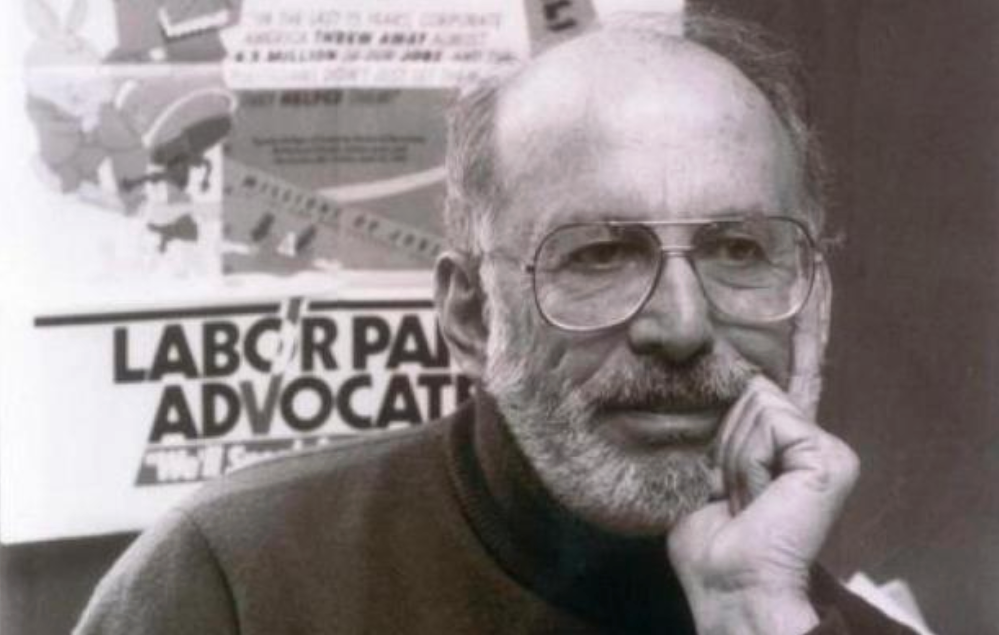
Tony Mazzocchi and the Oil, Chemical, and Atomic Workers Union (OCAW) led the drive to organize a labor party. Mazzocchi was widely regarded as a visionary at the forefront of the labor movement’s involvement in the major struggles for social justice in the postwar period, from the civil rights movement, anti-nuclear proliferation, and antiwar struggles to environmental justice and the movement for occupational health and safety. Mazzocchi served as the Labor Party’s founding national organizer.
By the Labor Party’s 1999 Constitutional Convention in Pittsburgh, the base of support among unionists had grown to six national unions, more than 200 union locals endorsing, and 39 Labor Party chapters. The members were ready to more substantively debate how they would go about building a party through issue-based and electoral campaigns. They approved five national campaigns: a single-payer health care campaign called “Just Health Care,” a campaign in opposition to the privatization of Social Security, a workers’ bill of rights, fair trade, and support for an already existing 28th Constitutional Amendment campaign to guarantee living-wage jobs. A Free Higher Education campaign was also developed.
For candidate campaigns, members approved a plan where candidates would be required to be members of the Labor Party, there would be no endorsing candidates on other ballot lines, and candidates would need to show that there were sufficient local labor union resources and organization to run a serious campaign. The policy insisted on the need to organize and consolidate a base before running a candidate in the various elections. This policy pointed out that “power” and influence flows from the organized movement of the working class, and not from the election of candidates in isolation from that movement. With these criteria in place, only the South Carolina Labor Party ran candidates for election and none were elected into office.
Negotiating Different Perspectives and Sections within the Class and Party
Any mass party of the working class, as the US Labor Party was attempting to become, will require navigating different perspectives and fighting for unity. The Program and campaigns can be understood in this way. The aim was for Just Health Care and Social Security campaigns to have broad appeal across the whole class and for the worker’s bill of rights, fair trade, and the 28th Amendment to be motivating for the rank-and-file members of organized labor.
Another divide that was largely suppressed was the pressure from the “leftist” flank that wanted to adopt more sectarian demands and slogans. Many so-called “leftists” also fought to run candidates immediately but were blocked.
While KWRU was officially a local of the local Hospital Workers Union, it also approached the Labor Party and its Program quite differently than the Trade Union sections. Tony Mazzocchi, the Labor Party’s lead organizer, recognized the importance of this new, growing impoverished and deindustrialized section of the working class as represented by organizing work of KWRU. The relationship between KWRU and the Labor Party is elaborated in greater detail in this article from this same issue. The political insight shown by Mazzocchi in his relationship with KWRU is quite instructive.
The prevailing but false understanding of many of the lead organizers and most of its members was that the trade union movement is the labor movement. From the lens of the Trade Unionists, workers have power on the basis of their labor which can be withheld. From this limited conception of power, the sustained collective action and moral power of the organized struggles of the unemployed and underemployed can be totally missed, and this was the case for many of the union members and leaders. Therefore, their concept of the “Labor Party” was that of a Trade Union Party with the non-union organizations of the under- and unemployed described as “workers’ support groups.”
However, at the time, entire populations of workers were beginning to be dispossessed of their labor-power by labor-replacing technology and beginning to become superfluous to the economy. Even people who had a job were still becoming homeless. Mazzochi recognized that the experiences and struggles of groupings like KWRU and others of the Poor People’s Economic Human Rights Campaign were not peripheral to the struggles of the working class. Rather, their economic position placed them in a growing and most impoverished section within the US working class as a whole. Mazzochi was clear that the organizations of the poor and dispossessed, whether their members were currently working and able to collectively withhold labor-power or not, were an important part of the labor movement and should have a voice in the Labor Party. After all, the worsening economic conditions in large and smaller cities throughout the country were being experienced most harshly by the poorest and most precarious workers. Over time, these conditions would expand to wider sections of the working class.
Demise of the Labor Party
The organizational and financial base of the US Labor Party was the various unions that had been organized during the height of the period of industrial capitalism, from the 1930s to the 1950s. As electronics-based production began replacing labor-intensive industrial production, the number of workers in these unions was reduced quite significantly. As a result, their political influence was declining. The Clinton Administration had spent eight years shifting the Democratic Party’s activity away from investing in US manufacturing as well as unraveling the social safety net through attacks on welfare rights and other government programs that supported the poor. Many of these unions joined the Labor Party because they saw it as a vehicle to pressure the Democratic Party in their attempt to regain their influence in the Democratic Party. This was not the case for all unions: some were more genuinely invested in an independent party. Among the larger unions primarily interested in “saving” the Democratic Party, the intention was to eventually leave the Labor Party and rejoin the Democratic Party, hopefully with some concessions secured. And this is what occurred.
With the election of George W. Bush in 2000 following the Clinton years, a debate emerged among the Labor Party union members as well as non-member unions and organizations across the country. Many agitated to join in the rebuilding of the Democratic Party in the hope of opposing further trade union contract concessions, as the best way of opposing the Republican agenda, the expansion of the military-industrial complex, and the continued deregulation of worker protections.
Two major events contributed to the shift in the Labor Party’s direction during this period of transition: the events of September 11, 2001, and Mazzocchi’s death on October 5, 2002. George W. Bush and the Republican Party’s war mongering intensified and opened the doors for the military-industrial complex to secure more federal money, removing investments from other social programs desperately needed by the poor, and once again enlisting poor people with the only path to social safety net available, fighting capitalist wars abroad. Just as this complicated the general political situation, Mazzocchi’s death removed the insight of the leader in the Labor Party with the clearest long-term vision for the party and the relationships to hold it together.
Major trade unions affiliated with the Labor Party took this moment to rejoin forces with the Democratic Party. This led for the most part to the demise of the Labor Party. As this happened, organizations of the poor affiliated with the Labor Party were left to strategize a new formation for political independence. It should be noted that KWRU’s work within the Labor Party and its growing unity with its lead organizer Mazzocchi and his section of that Party was focused on the formulation, development, and implementation of the Labor Party Program. As mentioned earlier, the platform recognized the right of the working class to the basic necessities of life as opposed to capitalist class rights to private property in the means of production and exchange. When major organizations of the upper-income trade union sections of the working class went back into the Democratic Party, they turned away from vision laid out in the Labor Party Program. On the other hand, KWRU, the Michigan Welfare Rights Organization, and other poor people’s organizations had no choice but to continue to carry out their struggle for that Program through other means.
Lessons for today
Our current historical moment, highlighted and underscored by the abysmally poor performance of the Democratic Party in the 2024 elections, has led other organizing spaces to explore the US Labor Party as a recent and relevant attempt at independence.
In February 2025, a panel on the topic drew more than 1,000 viewers nationally. This panel included Mark Dudzik, former national organizer of the Labor Party, and current chair of the Labor Campaign for Single Payer Healthcare; Carl Rosen, General President, United Electrical, Radio and Machine Workers of America and former participant in the Labor Party; Jenny Brown, former co-chair of the Labor Party Organizing Committee in Gainesville, Florida; and Howard Botwinick, Associate Professor of Economics at SUNY Cortland, former Vice Chair of the New York Labor Party. They shared highlights from the experience, especially highlighting the powerful platform developed by the Labor Party. They debated whether they would have done better to move more quickly or more slowly toward running candidates for office. Their perspective was focused on the role of trade unions within the US Labor Party and how organized labor might again engage in similar future third-party efforts. However, they made little to no mention of the struggles of the poor and dispossessed as a growing section of the labor movement within their historical account of the Labor Party other than to acknowledge that Mazzocchi pushed for a broader membership than union members and to acknowledge that union density has dropped significantly lower than its already depleted 1990s levels.
While none of these lessons are conclusions the panelists drew, there was a moment in which Dudzik helped to make the point:
“It’s really hard for people [trade union leaders] who are on the front lines battling the bosses every day to think about how to strategically disengage from the Democratic Party while they are building an alternative. They are taking off whatever few shields and weapons you have and they’re forging the other ones over there, but the bosses are coming right at you, so what are you going to do? … I represent hospital workers in New York City. The goddamn governor determines the Medicaid reimbursement rate, and if I don’t endorse him, he’s going to screw 100,000 of my members in the next budget cycle. How do you figure that stuff out? And that’s really the challenge that we have.”
This statement highlights the social position in which the upper-income sections of labor found itself at that time. Sheilah Garland-Olaranian’s article gives historical context to the 2023 UAW strike and the capitalist motivations behind “labor reforms” like the Wagner Act. To protect the gains they had already achieved in the face of an all-out attack by the capitalists, working people in trade unions were and are forced into a fight against concessions to their bosses. However, in a fight to abolish poverty altogether, a fight to fundamentally restructure society and put an end to all exploitation and oppression, the working class must be organized as a political force capable of transitioning from defense to offense in the process of fighting for state power. The poor are the new growing section of the working class with the least ties to capital and the least to lose in the restructuring of society. This section of labor, of the working class as a whole, is objectively being placed in a social position to lead the class on that offensive.
The economic shifts that led to the rise of the original National Union of the Homeless and KWRU have only intensified since the 1990s. The Labor Participation Rate (a more revealing statistic than the official Unemployment Rate) has steadily fallen since the 90s. It was still increasing in 1996 but reached a high point in 2000 at 67.3% and has fallen to 62.4% in February of 2025. Similarly and driven by the same economic trends, the Union Density Rate has fallen from the already low rate of 14% in 1996 to 9.9% in 2024. Most of the new jobs replacing some of the jobs that technological advancements eliminated have been low-wage service sector jobs – also an area where some unions are focusing their organizing efforts, although gains have been difficult. These jobs often do not provide health care, have high turnover rates due to their terrible working conditions, and do not provide a wage sufficient to cover an average rent, let alone allow a person to save toward a mortgage. More and more members of the working class are falling into the ranks of the poor.
This is the trend that Rev. Dr. Martin Luther King, Jr. saw just as it was beginning in 1967, and what he described during the Massey Lectures when he said: “There are millions of poor people in this country who have very little, or even nothing, to lose. If they can be helped to take action together, they will do so with a freedom and a power that will be a new and unsettling force in our complacent national life…”
Today, the MAGA movement and Trumpism are markedly different from the neo-conservative section of the ruling class represented by George W. Bush’s presidency. Yet we can still learn from experiences of that era that retreating to the Democratic party will not save anyone. It will only serve to delay the movement-building needed to chart an independent path forward.
What we need to build toward is a fighting political party of our class. Here we are not talking about a populist, “hybrid,” “third party,” but a party of the class that does more than maintain ballot line access. Such a party would be the organizational center for all the struggles of the working class — demonstrations, protests, strikes and elections. This party would recognize that the electoral arena is only one of the possible expressions of political independence of the working class.
Significantly, the history of the US Labor Party demonstrates very concretely why the growing ranks of the poorest section of the US working class – the homeless, those on Medicaid, those living paycheck to paycheck – must be organized as the base and leading force of this party of our class. These segments of the working class have the least ties to capital and therefore the least to lose in a restructuring of society. They are already in survival struggles and learning that these fights are life or death. We will continue losing until we get into step and build the independent organization we need to win.
—
Kirsten Rokke is an organizer who has engaged with electoral and issue campaigns for the past 20 years, including at the local, state, and federal level. Currently based in Pittsburgh, she previously lived and organized in Chicago.
Lenny Brody has been politically active since the early 1960s. During the mid-1960s he was a volunteer with the Southern Christian Leadership Conference, the civil rights organization led by Dr. Martin Luther King, Jr. in South Carolina. As part of his activities in protest of the Vietnam War he refused induction into the Army. He was a founding member of the Communist Labor Party and has studied economics and theories of political change while continuing his political activism. Currently he is one of the coordinators of the University of the Poor Think Tank and a member of the University of the Poor Journal.
Image: Original artwork by David Greene. Used with permission