October 21, 2026
by Sheilah Garland-Olaniran
There are competing ideas in our movements today about what is in the best interest of the working class and how those interests can be protected when brought up against the power and dominance of capital. The US ruling class obscures our class enemies through their influence and diversions. It becomes challenging to figure out when we must compromise or when we must negotiate our losses.
And while many people are moved to act when their individual or group rights are encroached upon or when they face increased economic hardships, they can all too often be diverted or outright bought off in direct opposition to their own best long-term interests. However, even with all these challenges, many working class people are beginning to develop a sense of themselves as a class in the fights that are emerging.
The growing spontaneous response of workers needs revolutionaries to keep struggles on track.
In this Issue of the University of the Poor Journal, we take a dive into a few fronts of struggle and take a look at history. As revolutionaries, we must understand the deepening economic crisis that is driving us toward revolution. As Cedar Monroe points out in his review of Edgar Snow’s Red Star Over China, we must understand our terrain, history and circumstance as Marxists to develop strategies and tactics to eventually overthrow this rotten system of capitalism.
Nijmie Zakkiyyah and Cedar Monroe write about how struggles against data centers are quickly developing into a fight that exposes the growing crisis of capitalism and the utter disposability of everyday people within this process. Across the country, people are rising and demanding moratoriums, a halt or pause on the building of hyperscale data centers. These AI data centers are becoming ubiquitous, and the whack-a-mole approach into which communities have been forced to fight, means more losses and short term, but not permanent, gains.
These fights show that our class needs its own party to gather and begin to make a political fight for their survival. The replacement of workers by emerging Artificial Intelligence is coming into deep contradiction with the ability of workers to reproduce what they need to survive . These conditions are becoming untenable. We are entering an epoch of class struggle. Working class people are developing a social consciousness of the source of the problem. The solutions cannot be realized without political power to collectively demand them.
The working class in this country are deeply religious, and the role of religion and how it is used to corral and control workers is the domain of churches, especially the mega churches, who have developed a strategy that fills the longing people have for belonging and care. The deeply embedded notions of prosperity gospel ensnare the working class in the notion that they can reconcile their growing poverty with the demands this dogma requires. Aaron Scott, in his compelling article, lays out a program that understands the soul of this country and how revolutionaries must connect with the Battle for the Bible and subsequently for the soul of this nation. With 65% of the US population expressing a connection to Christianity, this is contested territory that cannot be conceded to the ruling class or left to the extremism of the Christian right.
“What Is Marxism” by Lenny Brody reveals that the growing spontaneous struggles for activists and leaders of the movement are too often constrained by the limitations of pragmatism and sectarianism. These challenges faced by the leaders and fighters of today’s movements cannot be answered by the prevailing versions of Marxism many organizations hold. The article focuses on the fact that we must integrate the study of Marxism into our struggles. It is vital if we are to ultimately win and build the leaders the developing revolution requires. Developing and mastering Marxist philosophy is not just a suggestion for revolutionaries; it is a path to understanding the nature of the fight and how to see it deeply. Much like the socialist revolutions in the past needed to understand their terrain, we must understand and master the US terrain by developing “thinkers who are fighters and fighters who are thinkers.”
We mourn the loss of Annie Chambers and learn lessons from her life and the forces that helped her develop a clear understanding of the local political/electoral terrain in her city of Baltimore. Annie trained and helped develop communist revolutionaries where she lived and where she, herself, developed as a revolutionary. Bruce Parry, author of the article, offers a useful look at how she turned her fight against the systems of oppression in her city into a struggle that engaged much of her community to fight within the electoral arena. Annie was an integral part of his development as a revolutionary. There are lessons for us all in this article. We mourn the loss of Annie Chambers and stand with her spirit as a deeply committed revolutionary. Annie Chamber Presente!
And while Annie Chambers took over a house in which she lived for four decades, the spectre of homelessness is a stark reminder of how workers will never be able to resolve these growing issues without a socialist revolution.
Homelessness and the response of the ruling from the Supreme Court Grants Pass decision shows that the avenues for fighting are being systematically closed to the working class. Homelessness in the face of such incredible abundance made possible by the micro-chip, will not be solved under capitalism. Fighting for housing is one of those ground zero struggles that exposes the inability of capitalism to resolve it. Todd Cherkis, in his second installation of an examination of the Supreme Court decision in Grant’s Pass v. Johnson offers revolutionaries a deep dive into the horror this decision unleashes. It seemsthat more of these rulings to criminalize sections of the working class that have been permanently locked out of the system due to the deepening crisis of capitalism, will continue.
John Keller’s review of Dave Harvey’s The Story of Capital provides much clarification on where the application of technology has taken capital in the US and around the globe. The argument the book makes is that Harvey’s message is this: “that capital’s relentless search for profits may have resulted in mountains of cheap goods but threatens the existence of working people worldwide. The Story of Capital opens the door to understanding today’s economic disparities and the dire future we face. It also suggests that only by force of collective action can we slam the door on that future and build one that works for all people, not just profiteers.”
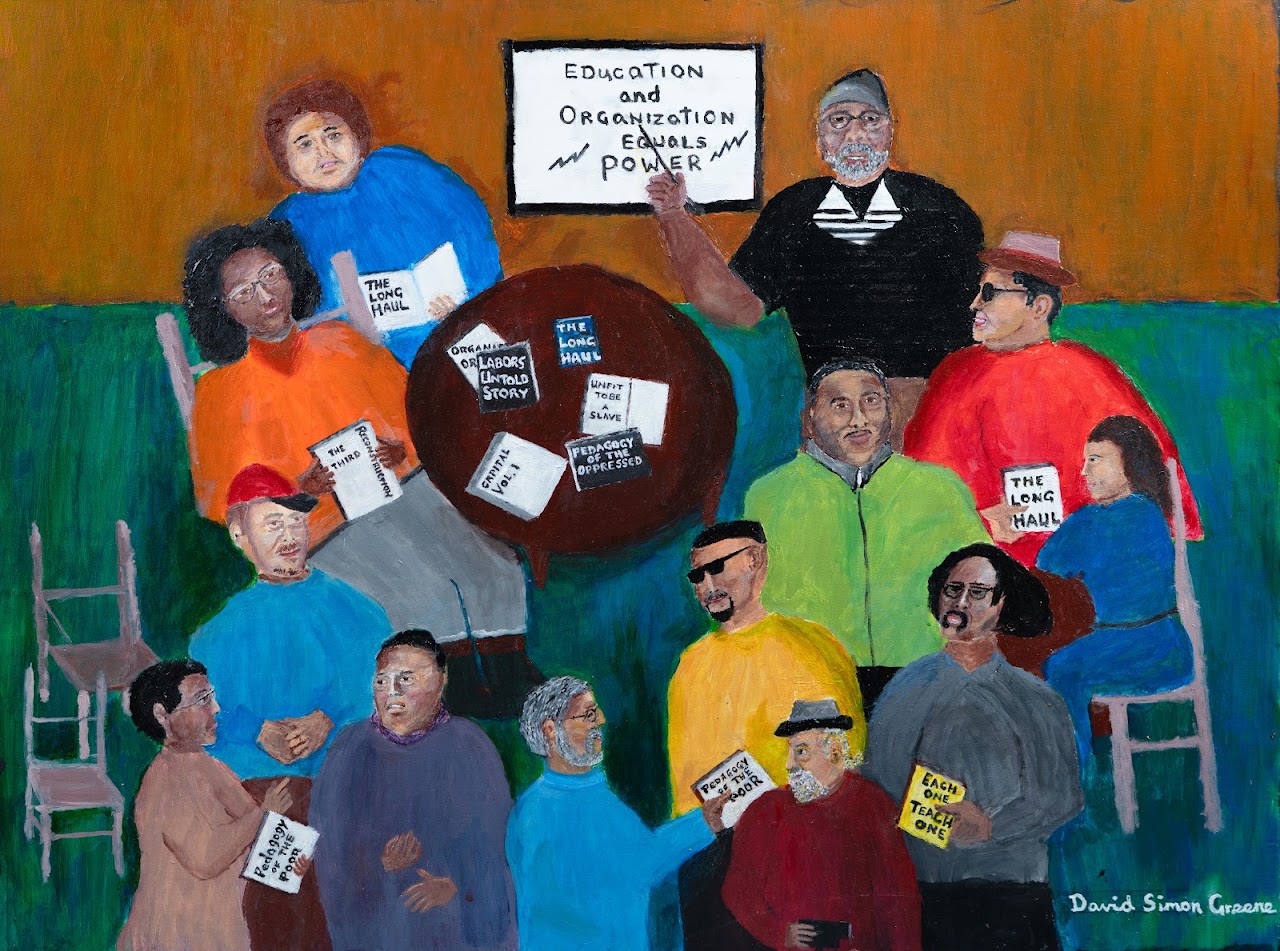
As revolutionary fighters and leaders in the class struggle getting underway, the program of the University of the Poor directs emerging communist revolutionaries to study in order understand the material conditions giving rise to the class struggle and how to help guide the struggle toward socialist revolution. Jonathan Nagy, offers an article that looks at the University of the Poor Chicago’s collective organizing a study of “What is Marxism?” The city of Chicago was rocked first in the nation by Trump’s attack through operation “Midway Blitz” and the unleashing of the ferocity of the state on the working class across the city.
While there was an understanding that communities needed to organize themselves to protect themselves, it became clear that Chicago activists had difficulty with the ferocity of the attack and the subsequent fallout from the destruction of the attack. Many leaders in the mass struggle are seeking to grow organizations and develop a better understanding of how to fight, and so there arose a demand to study and grasp Marxism as a philosophy for the working class. The lessons the Chicago University of the Poor Collective learned in their understanding of study and developing cadre through collective and individual study in the middle of the fight is an invaluable reading for cadre and leaders of the emerging struggles.
As leaders, organizers, and cadre of the University of the Poor reading this issue of the Journal, the working class is potentially facing challenging times for which we are ill-prepared. We must be able to understand the material conditions that are shaping the moves of the ruling class and their leaders. We must not only study these conditions, but we must also prepare and develop ourselves for what faces us now and for what lies ahead. There is much speculation from sections of the ruling class about their path forward. What we know is their path is one of death, war and destruction, no matter which of their party rules. Leaders and revolutionaries need an independent mass working class party to gather the scattered struggles and unite them into a political party that represents the fight of the working class. While there is no guarantee this will happen, we need to, nevertheless, begin to prepare for what is to come. And, for the US working class, it is difficult to put forth the political demands of the working class without taking this step. There are dangers ahead, but there are also tremendous opportunities.
We invite readers, both leaders and revolutionaries to read the Journal. Reply if you have questions but most importantly immerse yourselves in community, and protect one another as we prepare for what lies ahead. This is at once for our safety and what will help to keep us on course. Revolutionary love in these times helps humanize one another because we are dehumanized, threatened and far too often murdered by this system in hundreds of ways.
In Revolutionary Love,
Journal Committee of the University of the Poor
—