
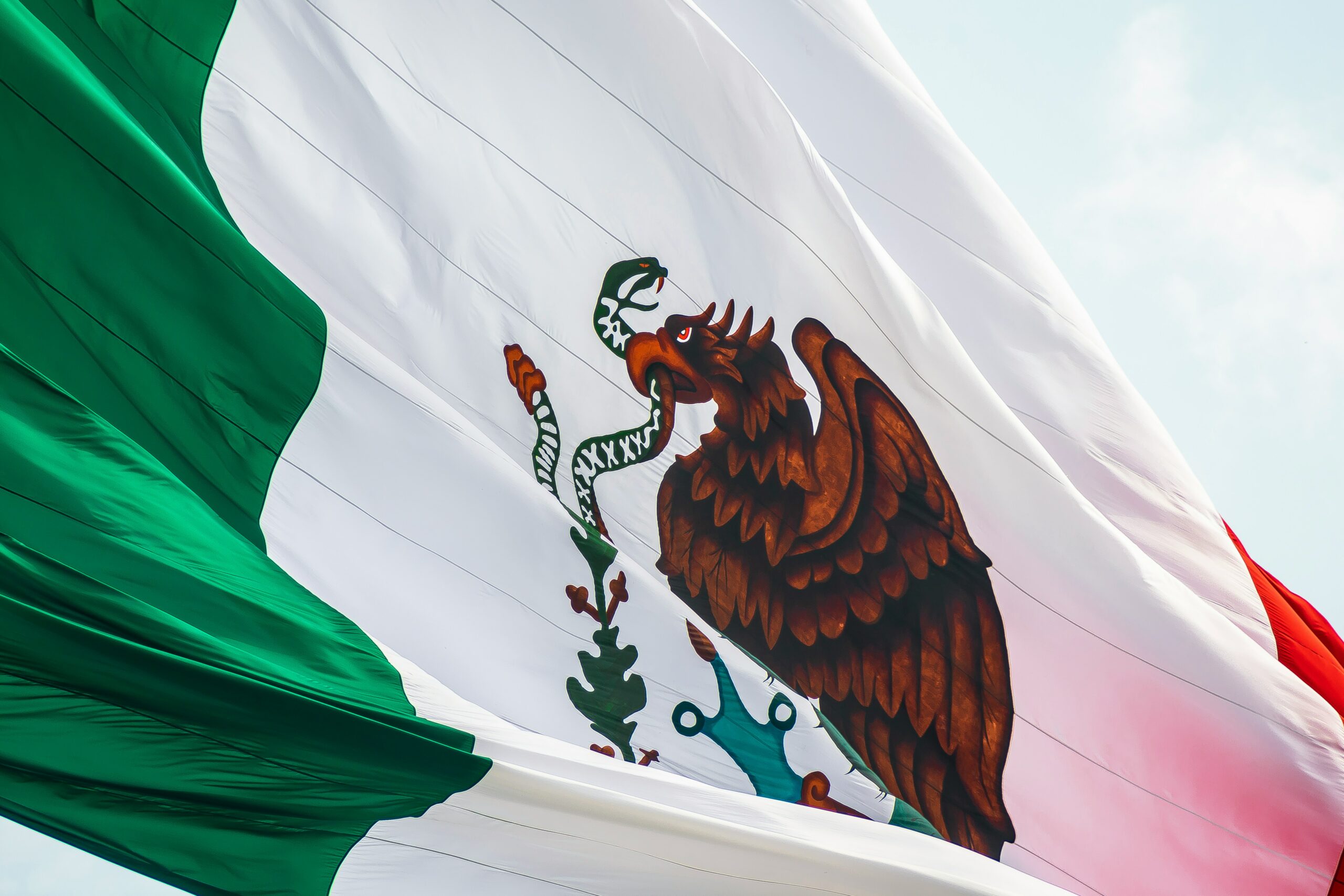
Mexico—A New Heartbeat in the Pulse Lines of Global Politics and Culture
By Luis J. Rodriguez
Mexico, with the Morena Party in power and the first woman president in its history, appears to be removing the chains, however slowly, that have prevented an old colonized and corrupted “third world” country from becoming a premier developing nation. In contrast, the United States’ fragile democratic fabric is unraveling under Trump. As the world holds its breath fearing “what’s next,” we should explore what lessons the Morena movement and party can hold for us in the United States.
Morena, which stands for the National Regeneration Movement (Movimiento de Regeneración Nacional), has been the ruling political party since 2018 when Mexico elected the popular Left president Andrés Manuel López Obrador. In 2024, Claudia Sheinbaum Pardo, also with the Morena Party, became the country’s 66th president. Founded in 2014, Morena quickly grew into the majority party in the National Assembly and the largest political party in Mexico, sweeping aside the old Institutional Revolutionary Party (Partido Revolucionario Institucional, or PRI), which ran the country for over 70 years, and its successor, the conservative National Action Party (Partido Acción Nacional, or PAN). Morena has also incorporated or swept aside other Left parties.
The word morena means “brown-skinned,” lifting up the Indigenous and more dark-skinned poor and working class of the country. La Morena is also an affectionate term for Mexico’s Catholic patron saint, La Virgen de Guadalupe.
Morena’s winning campaign slogan has been “Por el bien de todos, primero los pobres” (“For the good of all, the poor come first”). Morena has instituted key reforms in the economic and political arenas that should be noted. They’ve taken up the rights of women, including reproductive rights; they’ve embraced the Queer & Trans community; and they’ve placed prominent importance on the rights of Indigenous people. Morena has implemented pay cuts for governing bodies and reforms in the judicial and electoral officiating bodies. They’ve supported the end of pay gaps. But even the Morena Party must be seen with a critical eye.
As revolutionaries, our guide should be to support revolutions unconditionally… and support parties and states conditionally. The objective movement for the transformative systemic changes in the economic and political system must be taken to its conclusion with highly developed theory, grounded consciousness, real-world strategies, and skillful organizing. From that viewpoint, how does the Morena Party measure up?
In all movements, there are progressive tendencies and retrograde ones. The Zapatistas of southern Mexico are deeply critical of Morena. They’ve long abandoned electoral politics for autonomous zones of Indigenous communities where governance is local and in the hands of the governed. They see in all state-controlled parties the traps that have held the Mexican people outside their interests and for the benefit of the rich and powerful.
The almost thousand-mile Tren Maya (Maya Train) begun in 2020 in the Yucatan peninsula, which the Zapatistas and others have criticized, has gone across locally held lands. There are benefits to link the peoples, lands, and sacred sites, but again it’s expected to mostly profit investors, companies, and the tourism trade.
All movements will have these tensions. None are ever “pure” or perfect. But can this movement mobilize for real power independent of the ruling classes? For decades most of Mexico’s poor and working class has been estranged from the government. They have been mostly marshaled during election times, and left more powerless and deprived after the campaigns are over.
In Mexico, people got tired. Millions left their ranchos, pueblos, and cities to work in the unwelcoming climate of the United States, seeking jobs and other opportunities they couldn’t find at home. The Mexican economy officially incorporated only a smaller portion of the population, although with low incomes and no unemployment insurance. An informal economy—street peddlers, market vendors, small crop producers, as well as the illicit trade in drugs and other commodities—grew tremendously in the past fifty years even without stable incomes or benefits like health insurance or pensions. In addition, the tens of billions of dollars sent to Mexico each year from migrants in the United States provided the funds to do what the government and private companies didn’t—invest in infrastructure such as roads and schools as well as housing.
Morena rose up as a movement to fill in the vast gaps. Where they succeed, they should be applauded and supported. Where they do not, we should point to the structural blocks—such as private property and the capitalist system—that hold back any reform as well as expose U.S. policies that prevent Mexico from moving forward.
In the United States we must consider the possibility that real social and economic change can only happen with a mass movement, broad enough to encompass all members of the poor and working class: those employed and unemployed, housed and unhoused, organized and unorganized, free and incarcerated. In such a movement we support reform if they lead to a bottom-up revolution that in turn completes all reforms.
Presently the MAGA movement in the U.S. is being mobilized for fascism, including sections of people who perceive themselves to be in the falling “middle class,” mostly white, but also other sectors. The biggest billionaires (Musk, Bezos, Zuckerberg) and major financial and corporate institutions have joined in. Moreover, MAGA has taken over the Republican Party and fragmented the Democratic Party. By contrast, any small party today, however great their programs or well-meaning their leaders, such as the Greens, Libertarians, or Working Families Party, is not strong enough to impact the electoral arena.
A new revolutionary movement therefore must include members of various parties as well as those independent of any party. A new party may emerge out of this, but it can’t be ahead of or behind such a movement. It should also reach out to those workers caught up in or at least open to the spell of Trump and the MAGA movement—an important strategic consideration.
For now, leaders and organizers should connect with those most impacted by the economic crisis and dismantling of democratic institutions. We need integrated training of real leaders, especially those pushed out of the capitalist system’s manufacturing and markets. We must find the commonality of our struggles to pull such leaders together and not keep emphasizing what divides us (including things such as race, patriarchy, and xenophobia). This movement must be about the health and developmental needs of all people. Also, for a clean and green environment. And for peace at home and in the world, including against the genocide in Gaza.
This is not just to support “causes,” but to connect the dots—how our failing economy is linked to the maddening back-and-forth uncertainty of “America First” policies like tariffs and the forced removal of badly needed migrants from Mexico, Central America, South America, and the Caribbean. In addition, stopping the establishment of a war-ready military machine (including mandatory service) while ending the worst police practices and the carceral state.
The shape of this movement in the U.S. is still coming into being. But the essence and parameters are like any movement that has swept old parties, old ideas, and old ways of thinking such as the Morena movement in Mexico. New formations will arise to meet the immense challenges of the precarious times we’re in.
It’s time to study, engage, strategize, and organize for such possibilities.
—
Luis J. Rodriguez has 16 books in all genres, including the bestselling memoir “Always Running, La Vida Loca, Gang Days in L.A.” Rodriguez is founding editor of Tia Chucha Press and co-founder of Tia Chucha’s Centro Cultural & Bookstore in Los Angeles. He has written for daily, weekly, and monthly publications and was a writer/reporter for WMAQ All-News Radio in Chicago, variously owned by CNN, Westinghouse, and NBC. As a freelance writer, he’s covered stories in Mexico, including indigenous and campesino uprisings; the Contra War in Nicaragua and Honduras; and the rise of the maras in Central America. His writings have appeared in the New York Times, Los Angeles Times, Chicago Tribune, San Jose Mercury, The Guardian, Christian Science Monitor, L.A. Weekly, The Nation, Grand Street, Philadelphia Inquirer Magazine, San Francisco Chronicle, U.S. News & World Report, and The Huffington Post, among others. Luis served as Los Angeles’ official Poet Laureate from 2014 to 2016. His latest book is “From Our Land to Our Land: Essays, Journeys & Imaginings from a Native Xicanx Writer.”
Featured image by Jorge Aguilar on Unsplash.