
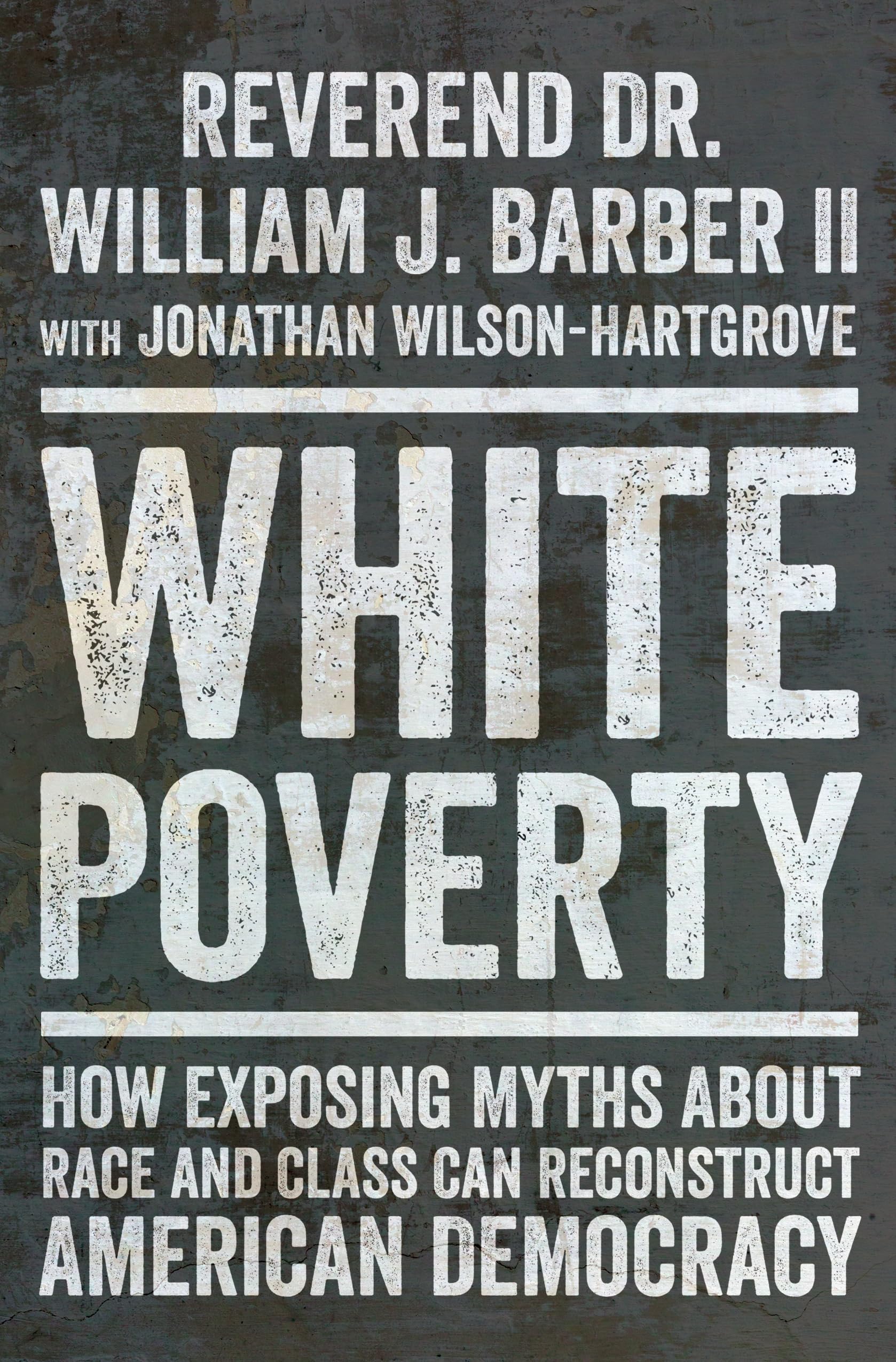
Book Review of White Poverty, by Reverend Dr. William J. Barber II, with Jonathan Wilson-Hartgrove
Reviewed by Dr. John F. Keller, Author of Power in America
White Poverty (Liveright Publishing Corporation, 2024) is incisive and groundbreaking. It is incisive because it cuts through the disorienting fog of racial concepts as they relate to poverty in America; and it is groundbreaking because it clears the path for a true class based understanding of poverty.
This book is the fruit of his most recent organizing work, and in the early chapters Reverend Barber relates some of the many stories that brought him to this point. He is a skilled organizer and writer whose faith guides him into treacherous waters as he seeks “moral fusion” in today’s real world: to unite the actions of moral women and men of all creeds and backgrounds toward a single goal of universal justice and economic opportunity. As Reverend Barber says, “to tell the truth” is revolutionary; and he is comfortable in that role.
But what is this truth he speaks of? In Part II of the book he critiques the notion that poverty is mainly an African-American problem, whether in the big cities of the North and West or the rural enclaves in the South. He debunks the myths that underlie this notion. First he shows that having pale skin color does not translate into shared economic success. How does one demonstrate this? The math is quite simple, and it goes like this. Economists calculate that 1% or 3 million Americans who have accumulated over 90% of this country’s wealth are for the most part “White.” Likewise sociologists estimate that there are 140 million American citizens living in or near poverty, and census data show that Hispanic-Americans constitute 27% of that number, African-Americans number 23%, and Asian Americans make up 5%. That leaves 45% of the poor being “White”.
Several conclusions can be drawn. There clearly is no shared economic interest between the mass of so-called “poor Whites” and the thin ranks of their rich kin. Nor is poverty simply a “Black” issue. Rather it cuts across all populations including Latin Americans, African Americans, Asian Americans, Native Americans and – in an effort to rid ourselves of racial concepts I’ll dispense with this meaningless word “Whites” – and just say European Americans.
In Part III of the book Reverend Barber tackles the implications of the analysis above. First, the disillusion of the middle class is an open wound that the political right tries to infect with every divisive, racist, and Christian-nationalist ideology they can concoct. These politicians understand quite clearly that they and the monied interests they represent are adrift in a tumultuous sea of homelessness, hunger, illness, and despair. They need jingoistic allies to keep their privileged positions from being swept away by an awakened, aware, and unified class of the poor.
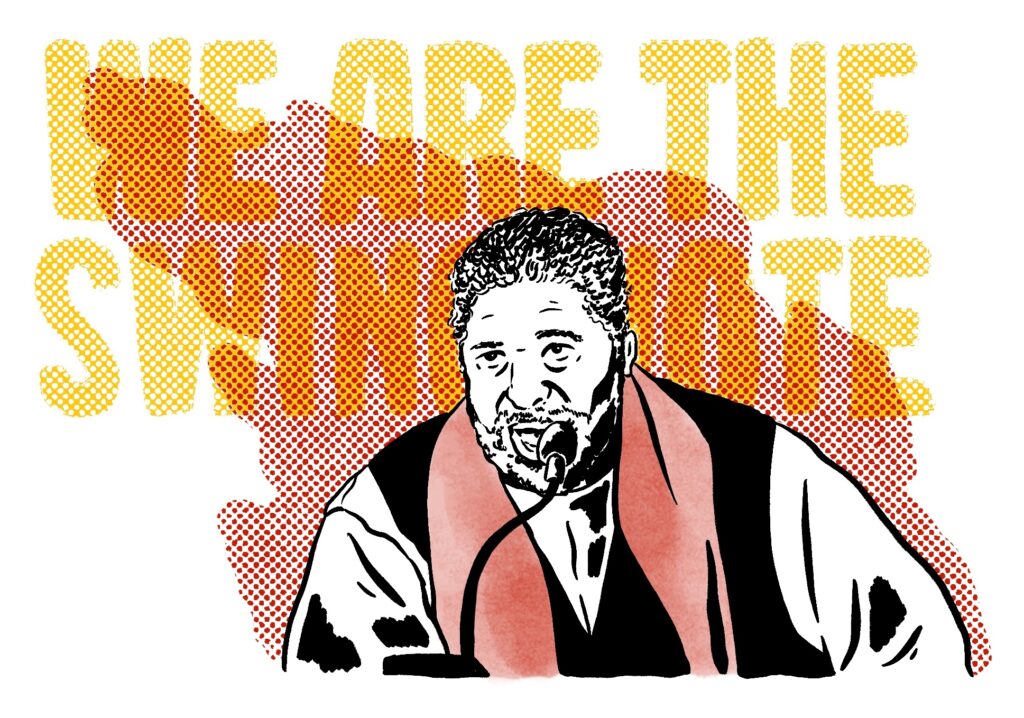
Reverend Barber identifies this huge bloc of the poor as the “New Swing Voters” and that everyone in this group, this class, must be lifted from the bottom up, and be activated. And the key to broad activation is simply “Rediscovering the Ties That Bind” all the segments of the poor together.
He calls upon all of us to become “repairers of the breach,” to heed the words of the prophet Isaiah, and do the hard work of befriending the poor, uniting with the poor, and treating the poor as family. Only then, Isaiah says, will we become repairers of the breach.


