By Luis J. Rodriguez
As the United States gathers and invests millions of dollars in what may be the costliest presidential election in its history, it’s clear that while Republicans have become mad with the cult of Trump and a U.S. strain of fascism cloaked in God, Country, and Guns, Democrats have found a footing among the so-called center, which is now gathering anti-Trump Republicans.
As such both parties will not and cannot resolve the social inequities and injustices that have root and growth in global capitalism. While as a tactic some class-conscious revolutionaries may advocate pitting one section of the ruling class against the other to stop Trump, we must continue to clarify that there is no reconciliation between shared well-being, clean and green environment, justice in the street and courts, and dignity and livable pay in the workplace within this debilitating economic system.
Homelessness, climate change, mass incarceration, police terror, and xenophobia will continue as long as capitalism does. Yes, things change. Technology advances. The country becomes more diverse and richer in cultures, flavors, and tongues. But war, economic crisis, and political chaos only worsen.
Yet, the understanding that the very property relations of our country is what’s holding us back is hard to get over to most people, even though a growing number of the population is ideologically becoming open to socialist or communist ideas. To fully engage a population of 330 million, or at least a significant and leading section of this population, requires deep and wide scale teaching, organizing, building, and consolidating. This should be ongoing. We have a major asset in our favor—the economy is creating a class of people who no longer have economic ties to capitalism, either because of lack of work and/or lack of housing.
Since the 1970s a section of working-class people no longer work or can even provide a roof over their heads. Not as a temporary phenomenon, but as a permanent fixture of society. The digital age has changed industry forever. From mechanically-to-electronically run industries, millions of workers have been pushed out of the once thriving, mostly union, pension and well-paid jobs from the 1950s and 1960s. By 1984 when Rock star Bruce Springsteen had his “Born in the U.S.A.” concert tour of the country’s rustbelt (and in the largest manufacturing region, the Los Angeles/Long Beach area), thousands of mills, mines, and factories had closed.
I know about this. For ten years from ages 15 to 25, I worked in warehouses, assembly plants, a paper mill, a refinery, a lead foundry, and a steel mill, as well as construction sites in greater Los Angeles. I labored at Bethlehem Steel Mill for four years and contracted as a machine rigger and installer at the General Motors Auto Plant in South Gate. I also briefly worked as a frame carpenter for tract homes. When I quit all this by 1980 to become a journalist and literary writer, most of those jobs were gone. By 1984 Los Angeles lost 300 plants, mills, and factories, including in auto, steel, shipping, canneries, defense, and aerospace. Many were union jobs that previously allowed working-class families to buy their first homes, including Black and Mexican families with the end of racist restrictive covenants in housing and consent degrees for better-paying skills work. I fell into such quota systems for Mexicans and Native Americans.
This was the first major shift in capitalist production development since agriculture made way for steam-powered industry in the 1800s. By the beginning of the 1990s, after the disastrous presidencies of Reagan and the first Bush (whose policies facilitated the transformation), the biggest private employer became Wal-Mart. Most jobs were in such service sector type businesses, mostly with no unions, low pay, and no benefits. Across the board, Black, white, and brown workers were adversely affected. I recall in the 1990s and 2000s covering stories, or to speak at former apparel, auto, or stockyard towns, with empty rows of brick buildings and silos in New Jersey, Connecticut, and Massachusetts as well as in Illinois, Indiana, Wisconsin, and Michigan.
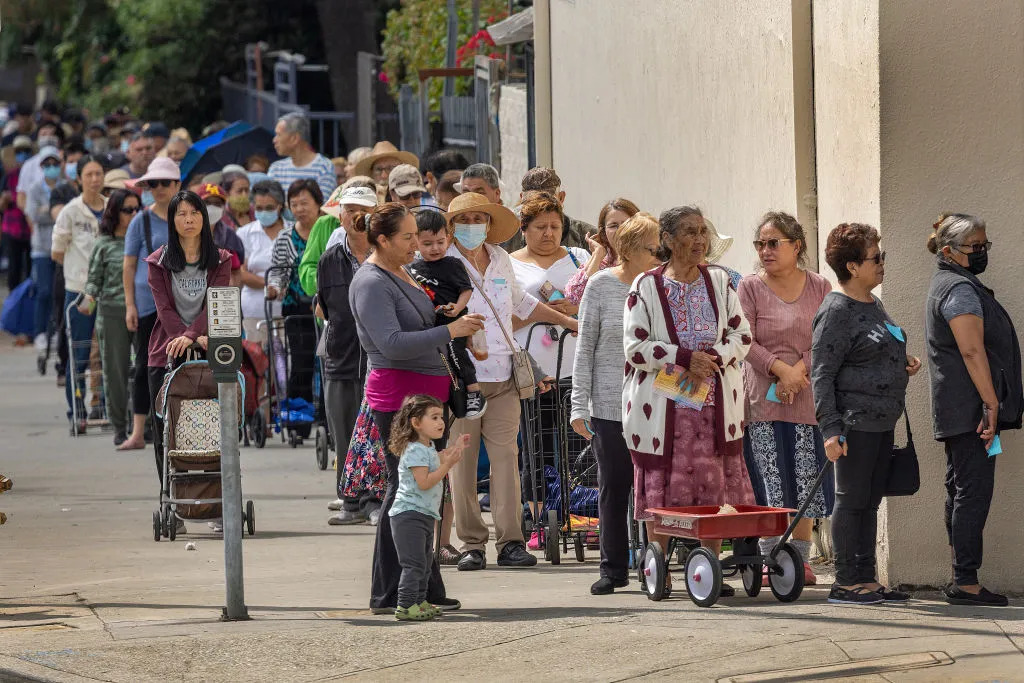
In the late 1970s the country also saw the rise of “permanent” homelessness, leading to the birth of organizations like the Union of the Homeless and National Coalition for the Homeless. Today every major city has growing encampments for the unhoused, but the state with the most is California, and Los Angeles, its former manufacturing hub, has the largest number in the state.
Every new economic crisis since the 1970s has removed more and more workers from the capitalist economy. At the same time, mass incarceration grew by billions of dollars, holding millions of people, and pushing them further away from partaking in any economic upturn. Now a growing number of people in Wal-Mart type jobs have also become unhoused. And when the 2008 mortgage recession occurred under the second Bush presidency, the newly elected Democratic administration of Barack Obama bailed out with close to a trillion dollars the very banks and financial institutions responsible for the crisis and millions of foreclosures.
The rise of White Christian Nationalism, who’ve anointed a non-Christian and breaker of all ten commandments like Donald J. Trump, along with others in the MAGA movement are again close to gaining power in the White House. It’s possible the Democrats have a way to hold this off with Kamala Harris, but she has had to move to the “center.” The time for class-conscious revolutionaries to act has long been here, but they can only advance forward if they connect with the “objective communist movement” (with a small “c”) of workers consisting of all races and ethnicities who have no stake in the capitalist system. This is now of immense strategic importance.
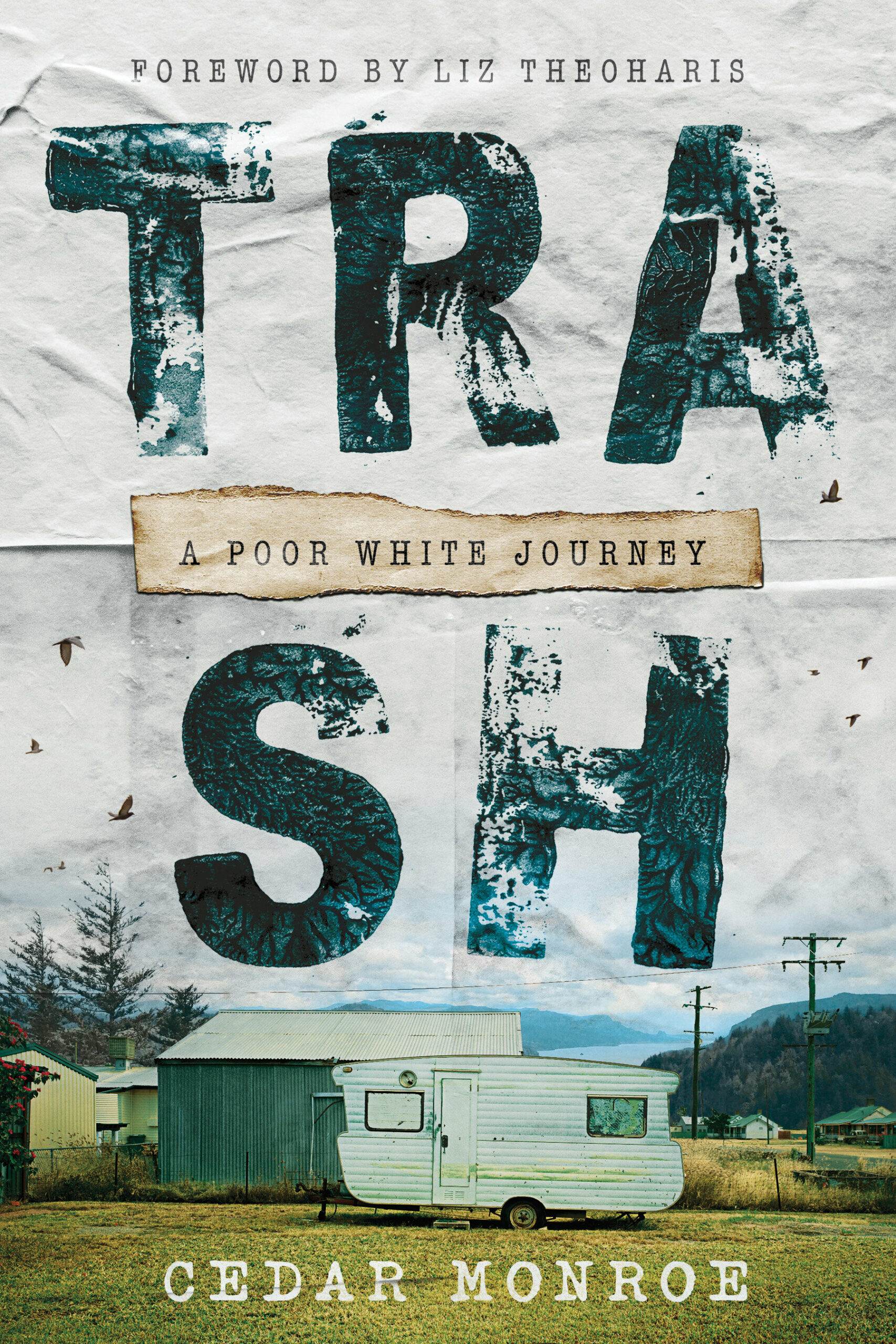
I recently saw on the Internet white workers attack the wealthy elite of this country. They were for “those at the bottom” and were willing to take on the billionaire class that has grown in wealth over the past 70 years as workers have lost ground in pay and living conditions. But they were talking about “white poor” against the “elite” of liberals and Democrats. Their fear was the “other”—Blacks, migrants, LGBTQ, and such. They were Trumpers. They talked the good talk but only as “white” workers, not as the working class made up of all races, genders, parties, belief systems, sexual orientation, etc.
They saw the poorest of the poor, including the undocumented, as parasites draining their livelihoods. They were taken in by the MAGA politics of extolling “white” people, white poverty, and white pain over the rest of the laboring masses.
In the main, conscious revolutionaries over the past fifty years have neglected these workers, although they needed deep clarity on their intrinsic interests and real enemies. Largely abandoned, the only ones who talked to them were the neo-fascists and MAGA propagandists.
As revolutionaries we must change this situation immediately.
These white workers are part of a growing percentage of all workers who don’t need capitalism. In essence their conditions can supersede whatever ideology holds sway in their minds. But we need to be among them for the short and long haul.
Society, objectively, is going toward its own resolution—to feed, house, and clothe all people, as well as provide quality and free healthcare, education, and arts development. It’s time to align technology and governance to people’s needs, not the profits of 1 percent of the population, including those who profit from war, pain, and misery. For any person or family or community to be safe and healthy, we must make sure every person, family, and community is safe and healthy. This is communism. This is not just an ideological thing, a belief-system, or wish list. This is where things are going. This is the future.
This means connecting the objective with the subjective–strategic thinking and leadership development with a sound theoretical foundation. Political power is the end game, but to get there we need an unbreakable bond with a significant number of these workers regardless of race or ideology.
Luis J. Rodriguez is a revolutionary thinker and organizer who ran for public office on a communist platform in his twenties, and most recently for vice-president for the Justice Party and California governor for the Green Party and Peace & Freedom Party.