
21 October 2026
By Lenny Brody
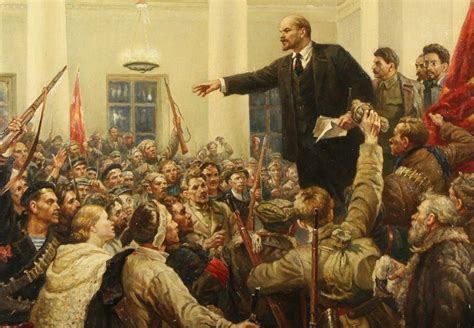
The study of Marxism is emerging as a key link in the development of the revolutionary process in the United States. Many social activists and revolutionaries are beginning to grasp the meaning of Lenin’s statement that there can be no revolutionary movement without revolutionary theory. Today there are many theories and analyses that people think of as “Marxism.” However, Marx and Engels, the founders of Marxism, considered a very specific set of ideas as the theory of Marxism. Lenin, a follower of Marx and Engels, wrote a pamphlet, “The Three Sources and Three Component Parts of Marxism,” which gives a clear definition of Marxism.
From Lenin’s pamphlet: “The history of philosophy and the history of social science show with perfect clarity that there is nothing resembling “sectarianism” in Marxism, in the sense of its being a hidebound, petrified doctrine, a doctrine which arose away from the high road of the development of world civilization. On the contrary, the genius of Marx consists precisely in his having furnished answers to questions already raised by the foremost minds of mankind. His doctrine emerged as the direct and immediate continuation of the teachings of the greatest representatives of philosophy, political economy and socialism.
“The Marxist doctrine is omnipotent because it is true. It is comprehensive and harmonious, and provides men with an integral world outlook irreconcilable with any form of superstition, reaction, or defense of bourgeois oppression. It is the legitimate successor to the best that man produced in the nineteenth century, as represented by German philosophy, English political economy and French socialism.”
The first component of Marxism is materialist philosophy. To see the world as it really is, it is necessary to understand that the objective, material reality is the dominant basis of reality. Ideas play a role only to the extent that they reflect objective conditions. Lenin noted that Marx’s historical materialism was a great achievement in scientific thinking. Historical materialism demonstrates that throughout history, the way things are produced shapes the way society is organized and how societies develop. Agricultural production led to societies based on slave owners and slaves, and feudal landowners and peasant serfs. Industrial production led to societies based on capitalists and workers. We all learned in high school that the industrial revolution revolutionized society. It led to the development of large urban centers with massive factories employing tens of thousands of workers in many of those plants. Industrial development also led to some societies, like Russia and China, where the working class won political power and were able to organize an elementary form of socialism. Production based on the microchip and electronic technology allows for the possible development of a society of abundance, where all the needs of people can be met, a new type of socialist society as the first stage of communism.
Marx identified that political institutions are a superstructure on the economic foundation of society, that is, who owns the productive forces determines the legal system, the educational institutions, and most importantly the political structure of the society. The dominant aspect of society is that politics is a concentrated expression of economics.
Marx’s further development of Hegel’s dialectics reveal how processes mature and are transformed, how everything develops from lower stages to higher stages and goes through qualitative transformation and the importance of how processes are connected.
The second component of Marxism is political economy, and in particular, how capitalism functions. The doctrine of surplus-value is the corner-stone of Marx’s economic theory. The extraction of surplus value from workers in the process of production is the foundation of capitalism. Workers own no productive property. They only have their labor power, a commodity, to sell in order to survive.
Capitalism goes through periodic economic crises. However, these crises are not fundamental, and do not herald the end of capitalism. It is the systemic economic crisis, which reveals the possible end of capitalism. It is when the relations of production (private property) come into contradiction with the way production is carried out that revolution becomes possible and necessary. Today historical materialism reveals and reality is demonstrating that production based on electronic technology cannot continue on the basis of private property. With the increasing elimination of workers in modern production, the extraction of surplus value in the process of production is disrupted, and thus the foundation of capitalism is undermined.
Marx pointed out that “At a certain stage of development, the material productive forces of society come into conflict with the existing relations of production or – this merely expresses the same thing in legal terms – with the property relations within the framework of which they have operated hitherto. From forms of development of the productive forces these relations turn into their fetters. Then begins an era of social revolution. The changes in the economic foundation lead sooner or later to the transformation of the whole immense superstructure.”
The third component of Marxism is class struggle. Marxism states that the spontaneous mass movement is “objective.” When people are oppressed and exploited they fight back. Revolutionaries are the “subjective factor.” They must be able to identify the important emerging working class struggles. A key question today is how do revolutionaries play their correct role within the mass movement. Revolutionaries don’t “create” the movement, but they participate in it, help organize it and keep it on track politically. Therefore revolutionaries must master the science of Marxism if they are to be able to see reality, the actual class struggles, and play their critical role.
Lenin noted that: “He who recognizes only the class struggle is not yet a Marxist; he may be found not to have gone beyond the boundaries of bourgeois reasoning and politics. To limit Marxism to the teaching of the class struggle means to curtail Marxism — to distort it, to reduce it to something which is acceptable to the bourgeoisie.
“A Marxist is one who extends the acceptance of class struggle to the acceptance of the dictatorship of the proletariat.”
This means that every class struggle is a political struggle, a fight for political power. The role of revolutionaries is to understand the stages of the fight for political power that the mass movement goes through and ensure that no stages are skipped and that the movement does not get stuck at any stage.
We can see that Marxism teaches not “what to think,” but rather “how to think.” Revolutionaries must master the science of Marxism if we are to play our part as “midwife” to the revolutionary role of the working class.
In Chicago the University of the Poor has been holding classes on “What is Marxism,” using Lenin’s pamphlet, “The Three Sources and Three Component Parts of Marxism.” The discussions have been very interesting and important, attempting to use the principles of Marxism to better understand the current reality we are facing. The economic crisis and the political upheavals are demanding that revolutionaries study and play their role in the class struggle to end the suffering of our class.
At this time in the US the study of this short pamphlet by Lenin is of critical importance. Many of those writing the current “leftist analysis” claim to be Marxist. Yet Marxism is made up of a system of principles identified by Lenin. Much of this analysis on the left has little relation to the body of thought known as Marxism. In order to understand the state of the current economic crisis of capitalism, to understand the stage of development of the working class struggle, and the plans of the capitalist class enemy, revolutionaries need to master the principles of Marxism.
Source: The Three Sources and Three Component Parts of Marxism.
Lenny Brody has been politically active since the early 1960s. During the mid-1960s he was a volunteer with the Southern Christian Leadership Conference, the civil rights organization led by Dr. Martin Luther King, Jr. in South Carolina. As part of his activities in protest of the Vietnam War he refused induction into the Army. He was a founding member of the Communist Labor Party and has studied economics and theories of political change while continuing his political activism. Currently he is one of the coordinators of the University of the Poor Think Tank and a member of the University of the Poor Journal.
—

[…] Original English text […]