
By Tammy Rosing and Weber Anderson
Introduction
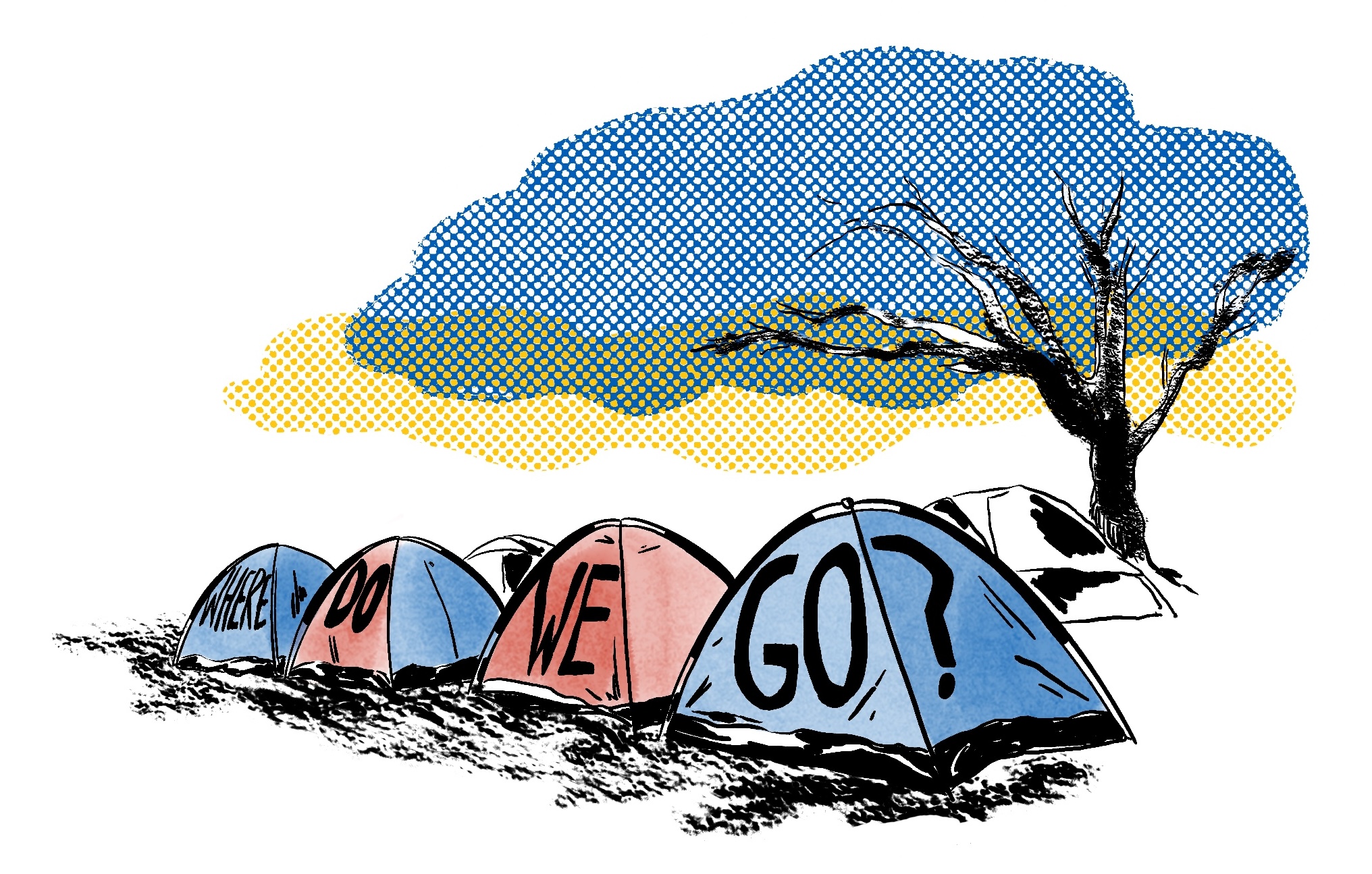
On June 28, 2024 the Supreme Court issued a ruling on the case of City of Grants Pass v. Johnson, and determined that it is not “cruel and unusual punishment” to arrest and jail people for sleeping in public parks, even if there is no other shelter available in their city. This opens the door for local governments around the nation to pass and enforce legislation that further criminalizes unhoused people for existing in public spaces. The move towards criminalization is the result of the deepening housing crisis that is driving masses of people into homelessness. The ruling class does not have any solution to homelessness within our economy that perpetuates structural poverty, and so it is resorting to incarceration instead. This is carceral thinking–the “solution” of arresting and jailing– and it will fall hard on homeless and poor people across all parts of the country. While our class is likely too disorganized to prevent local governments from passing heinous laws, or to stop police from making arrests, we can organize and unite leaders who are pulled into the fight against criminalization of the homeless, and use this to grow the independent organization of the poor.
In this article we explain what led up to this landmark Supreme Court decision, and relay a firsthand account from Tammy Rosing about how this case catalyzed various formations of poor people’s independent organizing in the months leading up to the final decision. Finally, we suggest some ways that mass organizations can rally, educate and deepen our organization by engaging the struggle against criminalization, as we anticipate violent repercussions of this decision.
Background and context
First it is useful to share a basic timeline of how the case unfolded. The City of Grants Pass, Oregon (pop. 38,000) has ordinances which charge fees for people found sleeping in public parks, with subsequent sentences of up to 30 days for repeat offenders. When a woman named Gloria Johnson was arrested and sentenced to 30 days in jail for sleeping in a public park in Grants Pass, she filed a lawsuit with other plaintiffs that was eventually decided in her favor by the 9th circuit court. That initial ruling explained that it is “cruel and unusual punishment” (8th amendment) to charge someone for sleeping in a public place when there is no readily available shelter to them. An important aspect of the case was that at the time of Ms. Johnson’s arrest, the only shelter with open beds in the city of Grants Pass held restrictions on smoking and required that residents attend religious service as a condition of staying there. It was indicated that this does not constitute “readily available shelter.” One of the consequences of this 2019 decision is that local governments conceded billions of dollars of investment into local shelter systems across the west coast states, so that they could have policing powers to restrict public camping.
We are constantly told that progressive and liberal politicians are committed to protecting vulnerable people, such as homeless folks; however this case was escalated to the Supreme Court under pressure of a coalition that included both conservative and liberal groups, who were seeking more “tools” to address the “public health crisis” of public camping. Over 50 organizations filed amicus curiae to petition the Supreme Court to reconsider the 9th Circuit’s ruling, including liberal West coast municipalities, California Governor Gavin Newsom, and the conservative Goldwater institute. In the wake of the decision, some pundits have blamed the Trump-appointed conservative judges on the Supreme Court, but we must remind our people that both progressive and conservative forces united in this effort to incarcerate the homeless. Regardless of red/blue issues, they share the fundamental need to market their cities as attractive homes for big capital, and this is much easier for them when police force is readily available to clear encampments and lock up the poor.
In the wake of the Supreme Court decision, dozens of cities are changing their laws to allow encampments to be cleared even when no shelter is readily available, whereas previously they were restricted from doing so. In July, California Governor Newsom issued an executive order that directed state agencies and local governments to expedite the clearing of encampments statewide. Already some folks are organizing against these attacks, which will continue to escalate. According to a recent article from the Guardian, the Berkeley Homeless Union has pitched an encampment of housed and unhoused people to publicly protest the recent change in Berkeley’s law that allows for criminalization. As organizer Gordon Gilmore states in the article, they are “trying to find what public spaces we can, for people to be in a place where they feel stable and safe, and be publicly visible.” This is an example of a tactic that unites targeted homeless people with housed allies to publicly improve safety conditions and raise awareness. We must tighten relationships between homeless organizers nationwide in order to evaluate and implement these tactics and many others, in order to unite leaders of the poor.
Activating the Homeless Union in PA and Beyond: A Firsthand Account from Tammy Rosing
Late January of 2024 I was scrolling on TikTok to see what human rights issues people were talking about so that I could understand the mindset of our class. I came across a video of a woman talking about the re-institutionalization of the poor and homeless and that we were heading back in that direction. She mentioned the Supreme Court and that they had agreed to take up the case Grants Pass vs. Johnson. I then decided to do some research and look into what this case was and understand as much as I could about it.
I learned about the case Grants Pass vs Johnson. The structure and history and current stance of our Supreme Court. I was utterly astounded to believe that this is a direction that the powers that be would take and it initially blew my mind. The more I learned the more aware I became about the reality of the evils of this system.
In February I started talking about it more as I gathered with people in our network, especially at the Put People First! PA (PPF-PA) Winter Steering Committee Retreat. I shared my concerns regarding the Supreme Court taking up this case and that it could essentially criminalize homelessness, and that it shocked, worried, angered, and scared me.
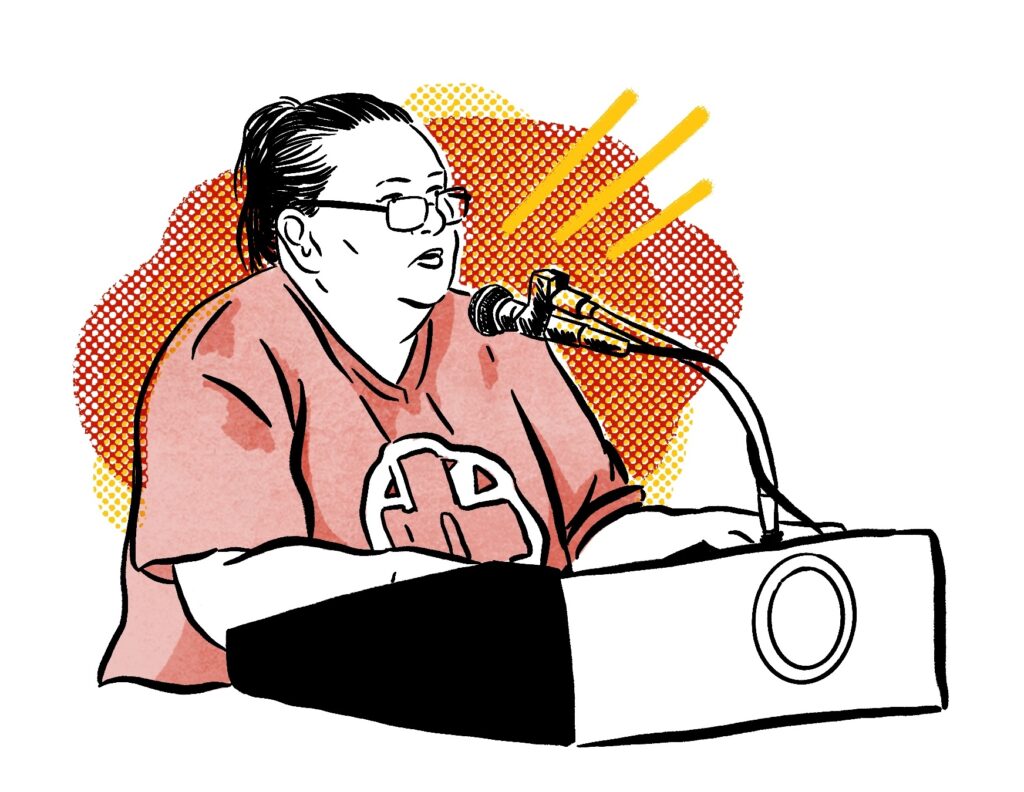
Much like how PPF-PA and the rest of the Nonviolent Medicaid Army took up the Medicaid Cut-Offs as an organizing drive, the more I realized as a member of the National Union of the Homeless (NUH) we needed to take up and lead on this fight around this case. We are the National Union OF the Homeless. This is a case regarding the potential to criminalize homelessness across our entire nation. We HAVE to be a leading force on this fight!
At the time this was all happening I was working at a homeless shelter and even experienced homelessness myself earlier in the year. The powers that be in my community of Lancaster, PA were planning to close the shelter at the end of June, leaving those folks without a safe place to rest at night and myself and others without a job.
Myself and co-worker, Maxine, pushed back against this idea of closing the shelter. In a staff meeting I suggested we bring our situation to the PA Poor People’s Campaign press conference and March 2nd rally. My co-worker suggested a local protest, “why don’t we take a bunch of our folks down to Binns Park and camp there until they change their minds about closing the shelter.” The ones in charge were not keen on any of our ideas on fighting back against the closure. So we took matters into our own hands, as directly impacted people and members of the community.
Throughout February and into the Spring, we were fighting to keep the shelter from closing, my husband and I were experiencing homelessness ourselves. We used our role in the NUH as people who were also directly impacted to bring the issue of this case into the forefront of the Pennsylvania Poor People’s Campaign: A National Call for Moral Revival.
We invited leaders from our shelter like Marvin, Rhonda and others to attend the February PA-PPC press conference, where they heard us speak about the case and our stance against the impending closure of the shelter and we were involved in the March 2nd nationwide mobilization to the state capitals.
In May the PA-PPC hosted a virtual educational about the Supreme Court case. We shared our plight, fight and insight on the case, and agitated for others to join us. We heard testimony from Chris in North Carolina, Max from Philadelphia and Rhonda from Lancaster, who conveyed the struggle we were in to keep open the shelter she relied on. I also shared a report back that was shared with me from California about “Camp Resolution” since they couldn’t be in attendance.
When we expressed our concerns about this case with people in power at the local level, we were shocked to be met with ignorance or apathy. I spoke with people at the Lancaster County Homeless Coalition which is managed under the Redevelopment Authority, a county government department.
I expressed our concern about the impending closure of the shelter, for they had the power and connections to stop the closure if they really wanted to. They are the ones that coordinate the funding for the shelter and manage a contract with whatever organization would run it.
The ones that I spoke with that worked for the Coalition, stated they were unaware of the Supreme Court taking up this case and they didn’t seem to see the urgency as we did in addressing it. These were people whose job it was to “tackle homelessness” via our public resources of local government and they were unaware? Nor did they seem to think it was a great concern!
I called the Lancaster City Mayor’s office and left a message. The mayor returned my call a day or two later and we engaged in a conversation about the unhoused in our community, the impending closure of the shelter where I worked, the Supreme Court case and my current experience with homelessness.
The Mayor expressed her “deepest sympathies” of the circumstances and stated she agreed and was concerned as well but offered no solutions to the problem and didn’t make clear if she was aware of the Supreme Court case prior to me reaching out. However due to her position, her awareness as to who we are, and the movement we are a part of, she was interested in seeing how she could move things along to address my husband and I current homeless status.
I also reached out and called the office of my State House Representative and left a message with them just as I did the Lancaster City Mayor’s office. I’m sad to report I received no call back from their office regarding this issue despite the fact that they saw us in Harrisburg in February and following the ruling coming out they and about a dozen other representatives took to “the stage” to announce their grievance on the ruling and that they would be introducing state legislation to prevent localities from criminalizing homelessness.
Simultaneously leaders in the NUH started to take action. A group of us worked collaboratively on drafting a website post in response to the announcement that the Supreme Court was taking up this case in hopes to help guide and educate the working class on this historical attack on our class.
In April, NUH leaders from across the United States joined organizations from across the nation for a rally on April 22nd in Washington D.C outside the Supreme Court building as the “Justices” on the inside were hearing arguments on the case.
While this was all happening I also engaged in organizing conversations around this with the shelter guests while at work. I invited them to events that were taking place during this time period. Besides the February press conference and mass gathering in Harrisburg March 2nd we took Pete, Rhonda, Iris, and Teresa to the Mission of Mercy Dental Clinic, as a Project of Survival, so they could get the dental care they needed and for us to continue building those relationships as we were taking action together.
I shared about the impending closure of shelter in relation to Grants Pass Supreme Court case on a national press conference rally ahead of the Poor People’s Campaign June 29th Mass gathering in Washington D.C. of which we also took Marvin, Iris, Rhonda and Pete from shelter with us. On June 30th, two days after the ruling came through, and one day following the mass Poor People’s Campaign rally in D.C we organized, alongside two of my coworkers, a last night “no room at the Inn” event where we made the space our own and essentially “commandeered” the shelter.
I knew the ruling was going to come in June. I just didn’t know when. So I checked the news every day throughout that month and watched the Supreme Court announce ruling after ruling and wondered why they were waiting so long to announce the Grants Pass case because they heard arguments back in late April. What came to pass was almost prophetic.
The Supreme Court announced the ruling in favor of Grants Pass on Friday June 28th, the day before the mass national Poor People’s Campaign gathering in Washington D.C. I found out about the ruling through several different messages that came in at the same time. The Supreme Court came back with the ruling and it was in favor of Grant’s Pass and we knew exactly what that meant for the poor and dispossessed.
Immediately, I cried profusely, while I thought of the people that I have spent the last several years getting to know. Seeing them day in and day out at the shelter. I reached out for peer support and immediately through those conversations my feelings went from okay, I’m angry and upset, this is so wrong, but now we need to organize and I started spewing out ideas. We must take action and bring our narrative into the forefront of this fight!
The day the ruling came through, because we as the NUH were already taking action around this, we were able to very quickly respond to the moment and put something out on social media to grab a hold of the narrative and our class who were sure to to be desirous to take action around the ruling, Chris, a leader from the NUH in North Carolina created a graphic that explicitly states we reject this ruling and we need people to join us and get organized!
Our class is hungry to take action around this! They are angry, mortified, targeted, essentially fighting for our very survival and right to exist on this earth. That’s what this fight means, fighting back for our very right to exist.
Conclusion
As criminalization increases in our communities, we must bring people to ask, “how come our government doesn’t have enough money to house us for a month, but they do have enough money to lock us up for a month? Isn’t it less expensive to give me a home-and-leave-me-alone, than a jail cell where they gotta pay police officers, prosecutors, judges, attorneys, and prison guards?” In fact that is true, in California for example in 2021 it cost $106,000 to imprison an inmate for one year, on average (not including price of police and court systems). In comparison, the average “fair market rent” determined by HUD is $22,656 per year, (for a single bedroom apartment in Orange County, CA, 2021). The difference between these numbers is obscene – it highlights the horrific enemy and unifying conditions that poor folks of all backgrounds face. Our organizations must develop political education that brings this clarity to our neighbors facing criminalization and their allies.
We look forward to this year’s NUH Winter Offensive Organizing Drive which runs from Thanksgiving Day through MLK Day. There is the potential in utilizing this annual Organizing Drive to bring our narrative around the fight for our right to exist to the forefront, and grow both the National Union of the Homeless and the national Nonviolent Medicaid Army!
We call on fellow organizers to study and support the NUH Winter Offensive, starting with this pamphlet by Savina Martin and Willie Baptist (University of the Poor, 2021). Here we find a crucial framework for our organizing. “The homeless population by itself cannot abolish capitalism and poverty, the root cause of homelessness. This is similar to the situation of the enslaved Black poor. They could not abolish the entire American capitalist slave economic and social system by themselves. However, the mass rebellions and the protracted, brave, clever, illegal operations of the runaway slaves of the Underground Railroad had the ideological and political impact of igniting the entire country, leading to the massive social convulsion of a civil war and economic and political reconstruction. This drive of the homeless poor today – composed of people of every racial and ethnic background – parallels that of the concerted and covert operations of the Underground Railroad.” Increased criminalization following Grants Pass vs. Johnson has the potential to move broad masses of our society into a powerful force, as long as the unhoused and those living one paycheck away from poverty and homelessness get organized and develop visionary leadership together.
We must declare ourselves as Poverty Abolitionists loudly and proudly. We must demand our HUMAN RIGHTS to healthcare and housing. The people in power create the conditions that they then criminalize US for. ENOUGH is ENOUGH! It’s time we DEMAND an end to the oppression, denial of all of our human rights and the criminalization of poverty! Let’s put THE SYSTEM and people in power on trial for crimes perpetrated against US! WE must organize People’s Clinics and People’s Hearings alongside the Nonviolent Medicaid Army, and carry out a widespread Winter Offensive!


Thank you Tammy & Weber! This is powerful testimony and motivation for all who are poor or low income. I realize that any of us could be next, subject to the brutal conditions of being unhoused & constantly at risk of incarceration or death. We must become poverty abolitionists and condemn this exploitative system to death!
Tammy, you are an inspiration.